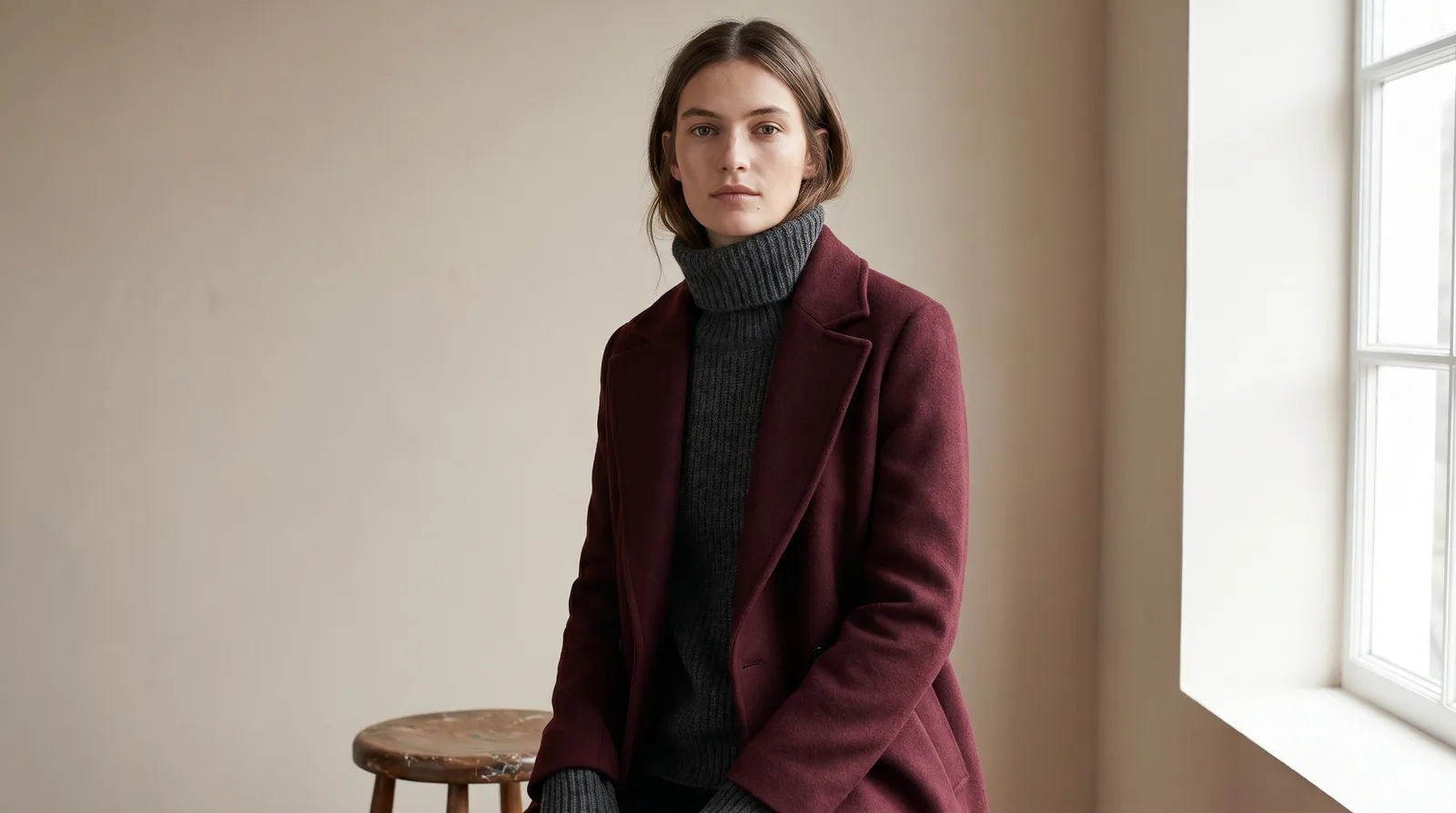
Midjourney vs Milano AI for Fashion (2026)
Midjourney makes gorgeous images. But can it run a fashion catalog where the same garment stays the same across forty shots? An honest comparison for brands that sell clothing.
Can I use Midjourney for my product photos?
It's a fair question, and a popular one. Midjourney makes some of the most beautiful images on the internet — drop in a few words and you get a luxury-campaign look back in under a minute. For a mood, a concept, or a single hero visual, it's genuinely brilliant.
Here's the honest answer: Midjourney is an art tool that happens to be incredible at fashion aesthetics. Milano AI is built to photograph your actual products — accurately, consistently, and in the formats a store needs. For one striking concept image, Midjourney is often all you need. For a real catalog — where the same coat has to look like the same coat across forty listings, on a model, sized for each channel — the two tools stop being comparable.
This guide compares them fairly: where Midjourney wins, where it breaks for selling clothing, and how to decide which one belongs in your workflow.
Midjourney vs Milano AI at a glance
| Midjourney | Milano AI | |
|---|---|---|
| What it is | A general AI art generator with a luxury aesthetic | A platform built only for fashion campaigns, product photos, and catalogs |
| Best for | Concepts, moodboards, editorial inspiration, art | On-model imagery, consistent catalogs, ads, launches, marketplaces |
| Keeps your real garment accurate | – Reinterprets details every time | ✓ Built to preserve the real garment |
| Consistency across a set | – Drifts shot to shot | ✓ Reusable model, scene, and brand look |
| On-model fashion that holds up | – Fabric and fit can warp | ✓ Designed for on-model clothing |
| Marketplace-ready output | – Not aware of listing rules | ✓ Made for Amazon and listing requirements |
| Video from the same product | – Clips, not product-faithful | ✓ Stills and video, end to end |
| Price | $10–$120/month, paid only | Free to start; fashion-built plans |
| Learning curve | Prompt-craft + reference parameters | Pick a model and scene, or describe it |
What Midjourney is (and what it's genuinely great at)
Midjourney is a general-purpose AI image generator with an unusually strong sense of style. It excels at artistic range and aesthetics — editorial mood, dramatic lighting, surreal concepts, and that high-end "luxury campaign" feel that's hard to get anywhere else. For a fashion brand, that makes it a fantastic ideation partner: build a moodboard, explore a creative direction, sketch a season's vibe, or produce one striking concept image to align a team.
Its strengths are real and we won't pretend otherwise. If you want imagination, beauty, and breadth of style in a single prompt, Midjourney is hard to beat. It runs on four paid tiers — Basic at $10/month up to Mega at $120/month, with no free plan as of 2026 — and that subscription buys you a creative studio that can render almost anything you can describe.
What Milano AI is
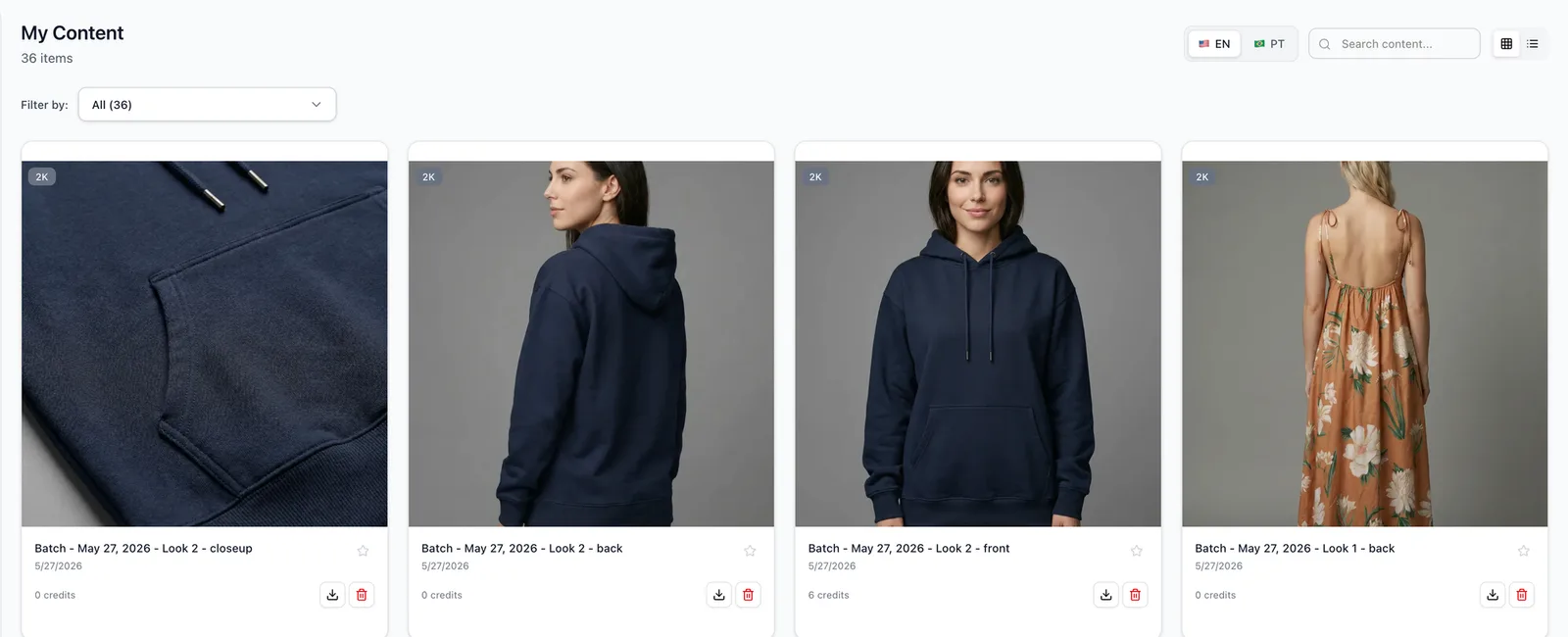
Milano AI is an operating system for fashion brands. You start from a product photo you already have — a garment on a model, a flat lay, a hanger shot — and the platform builds campaign-ready images around the real item: on a model you choose, in a scene you set, in the exact format each channel needs. The same tools cover product photography, e-commerce shots, catalogs and lookbooks, and video. It's narrow on purpose: every feature exists to help a clothing brand sell, not to make art for its own sake.
Can Midjourney do product photography?
Yes — Midjourney can produce a photorealistic product concept, and it often looks stunning. The catch is that it generates the idea of your product, not a faithful copy of it. It works best for marketing mood and hero visuals, and weakest for listing images that have to match the item a customer receives. Sellers love it for a few social posts and hit a wall at catalog scale.
The reason is structural. Midjourney recreates your product from its training data rather than locking your actual pixels, so a logo shifts, a strap moves, or a print becomes a pattern it invented. For a billboard, that's fine. For an Amazon listing, it means the photo doesn't match the box — and mismatched photos drive returns.
Why isn't Midjourney consistent across images?
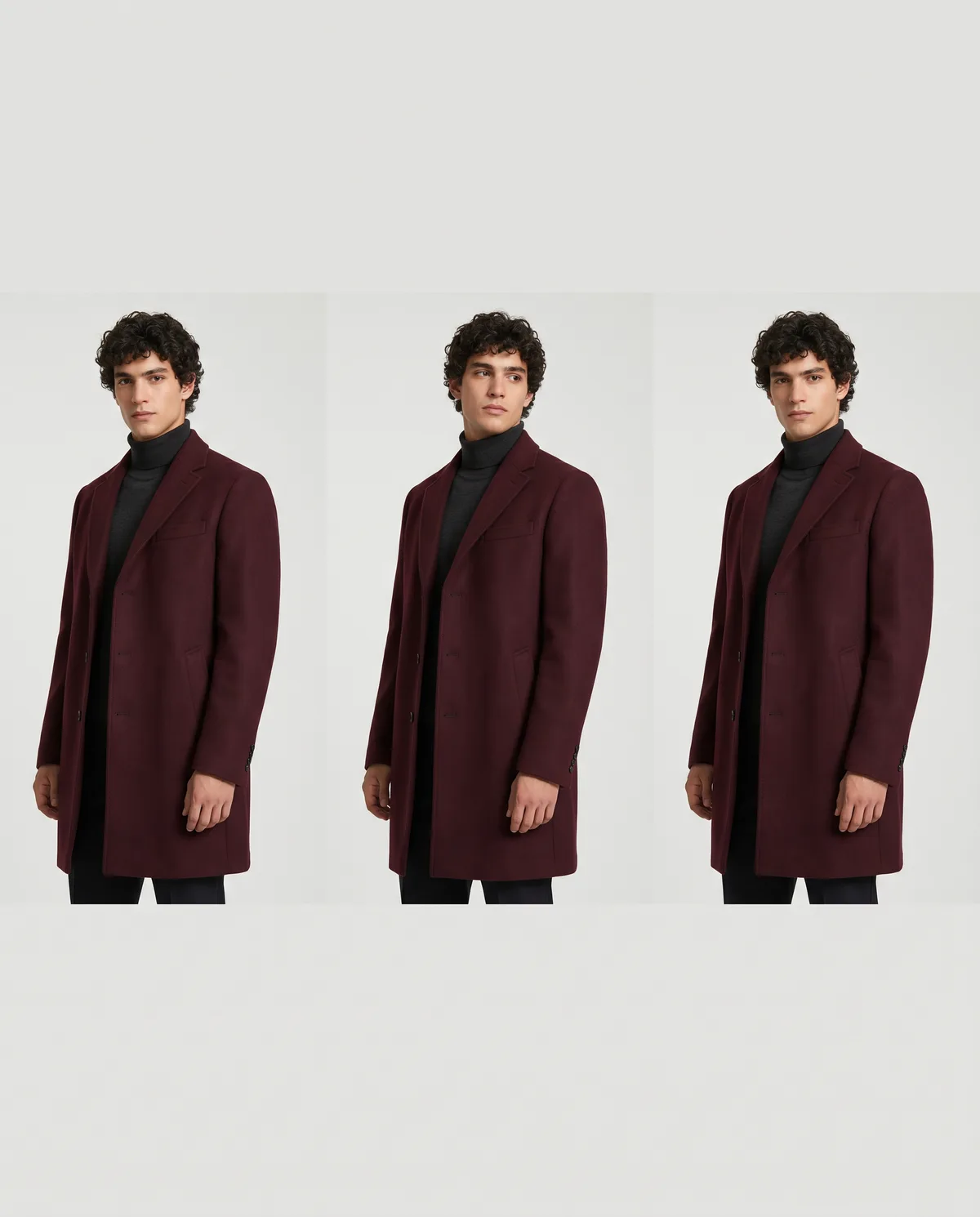
Because every generation is independent. Midjourney samples from a broad probability distribution each time you prompt it, with no persistent memory of the previous image — so the model, lighting, angle, and product details "drift" from shot to shot. Ask for the same coat ten times and you get ten slightly different coats. A catalog needs the exact opposite: one look, repeated.
You can fight the drift with reference parameters — --sref for style, --cref/--oref for a character or object, --cw to weight it, and --seed to re-anchor. These help, but they're style approximation, not production-grade repeatability. There's no native way to lock framing, lighting, and the real garment identically across twenty SKUs. Color accuracy alone can vary 40–60% versus the actual product, so every image still needs a manual review-and-fix pass.
Can Midjourney keep my real product accurate?
Not reliably. Midjourney's own guidance is candid about it: intricate details "like specific freckles or logos on clothing might not come out exactly right," and references guide new creations rather than copy them. For fashion that's the whole ballgame — cut, color, pattern, logo, fabric, and drape are exactly what it struggles to preserve.
Milano AI is built around the opposite promise. You anchor it to your real product photo, add detail references for the parts that matter — buttons, hardware, embroidery, a print — and the platform keeps the garment's color, fabric, and silhouette intact while it builds the scene around it. The point isn't a pretty image; it's an image of your item.
Is Midjourney good for on-model clothing photos?
It's good for fashion-flavored on-model imagery — a striking editorial figure in a striking outfit. It's far less reliable when the outfit has to be your specific garment worn correctly. Because Midjourney doesn't model real-world fabric physics or fit, clothing can melt into skin, seams can vanish, and layered looks can merge into something structurally impossible.
A structured academic study of Midjourney's fashion output found prints were frequently misinterpreted as backgrounds and silhouette accuracy swung wildly by garment type. Milano AI is purpose-built for the on-model job: put a real garment on a chosen model, in a chosen pose and scene, and get a clean, consistent set you can actually list.
Feature by feature, honestly
| What matters for fashion | Midjourney | Milano AI |
|---|---|---|
| Concepts, moodboards, editorial art | ✓ Best in class | – Not the focus |
| Breadth of visual style | ✓ Enormous range | – Fashion-focused |
| Keeping the real garment accurate | – Reinvents details | ✓ Preserves the real item |
| Consistency across a whole set | – Drifts each generation | ✓ Reusable model and scene |
| On-model clothing that holds up | – Fabric/fit can warp | ✓ Built for on-model |
| Marketplace-ready formats and white backgrounds | – Not listing-aware | ✓ Made for listings |
| A full catalog or campaign at scale | – Manual prompt per SKU | ✓ One product → full set |
| Video from the same product | – General clips | ✓ Stills and video |
| Ease for a non-designer | – Prompt-craft required | ✓ Pick or describe |
| Built for fashion specifically | – General-purpose | ✓ Fashion only |
A few of these are worth explaining, because they're where the "just use Midjourney" plan quietly falls apart for a clothing brand:
- Product accuracy. Midjourney reinterprets your product; Milano preserves it. For art, reinterpretation is the feature. For a listing, it's the bug.
- Consistency. A catalog is forty images that look like one shoot. Midjourney's independent generations drift; Milano locks a model, a scene, and a brand look and reuses them.
- Marketplace fit. Listings have rules — clean backgrounds, the right resolution, the right crop. Milano generates for where the image will actually live; with Midjourney you fix images by hand.
- End to end. A launch needs stills and motion, in several formats. Milano takes the same product through campaign, catalog, and video.
Can I use Midjourney images on a marketplace?
You can — Midjourney doesn't block it — but two things get in the way for selling clothing. First, marketplaces like Amazon enforce real listing rules (clean backgrounds, minimum resolution, no misleading imagery), and a drifting, reinvented product photo can misrepresent the item, which fuels returns. Second, Midjourney isn't listing-aware, so you're hand-fixing crops and backgrounds for every SKU.
Milano AI generates for the destination from the start — clean, on-model, in the format Amazon (or Mercado Livre and Shopee) expects — so the set is listing-ready instead of a manual cleanup project. When the photo has to be the product, that difference is the whole job.
Does Midjourney have commercial rights for product photos?
Yes, with conditions. Every paid Midjourney plan grants you ownership and commercial use of what you create; there's no free tier in 2026, so casual non-commercial use isn't really on the table. One catch matters for growing brands: if your company grosses over $1,000,000 a year, you must be on the Pro ($60/month) or Mega ($120/month) plan to use the images commercially.
Two more notes. Midjourney offers no legal indemnification if a generated image is challenged, and under current US law a purely AI-generated image may not qualify for copyright protection at all. None of that blocks everyday commercial use — but it's worth knowing before you build a brand's entire visual identity on it.
Midjourney vs Milano AI — which is better for fashion?
For making art about fashion, Midjourney. For photographing and selling fashion, Milano AI. The better tool depends entirely on the job in front of you — so here's how it maps to real situations:
- You need a moodboard or a creative direction → Midjourney. Explore looks, lighting, and concepts fast and beautifully.
- You need a consistent catalog of your real garments → Milano AI. One product becomes a matched set that reads like one shoot.
- You need on-model shots that keep the fabric and fit right → Milano AI. The garment stays your garment.
- You need marketplace-ready listings for Amazon → Milano AI. Generated for the format and the rules.
- You need one striking hero concept for a campaign idea → Midjourney. Then rebuild it accurately in Milano.
- You need video from the same product → Milano AI. Stills and motion from one source.
When should I use Midjourney and when Milano AI?
You don't have to pick a side — many brands use both. The clean rule: use Midjourney to imagine, use Milano AI to sell. One is a creative studio for concepts and beauty; the other is a fashion photographer that keeps your real product accurate at scale.
- Reach for Midjourney when you're exploring — moodboards, concepts, editorial art, a single hero visual, or anything that isn't a literal product image.
- Reach for Milano AI when the image has to be the product — on-model shots, a consistent catalog, marketplace listings, ads to test, a launch, or video.
- Both, together: dream up the campaign's look in Midjourney, then build the real, accurate, consistent campaign in Milano AI.
Bottom line: Midjourney is the best art tool for fashion inspiration — moodboards, concepts, and editorial beauty. Milano AI is built to photograph your real products and keep them accurate and consistent across a full catalog, on-model, marketplace-ready, and into video. Use Midjourney to imagine; use Milano to sell.
Frequently Asked Questions
Not reliably. Midjourney recreates the idea of your product rather than locking the real pixels, so logos, prints, and details drift between generations — its own docs note logos on clothing "might not come out exactly right." Milano AI is built to preserve your real garment's color, fabric, and details.
Related Articles
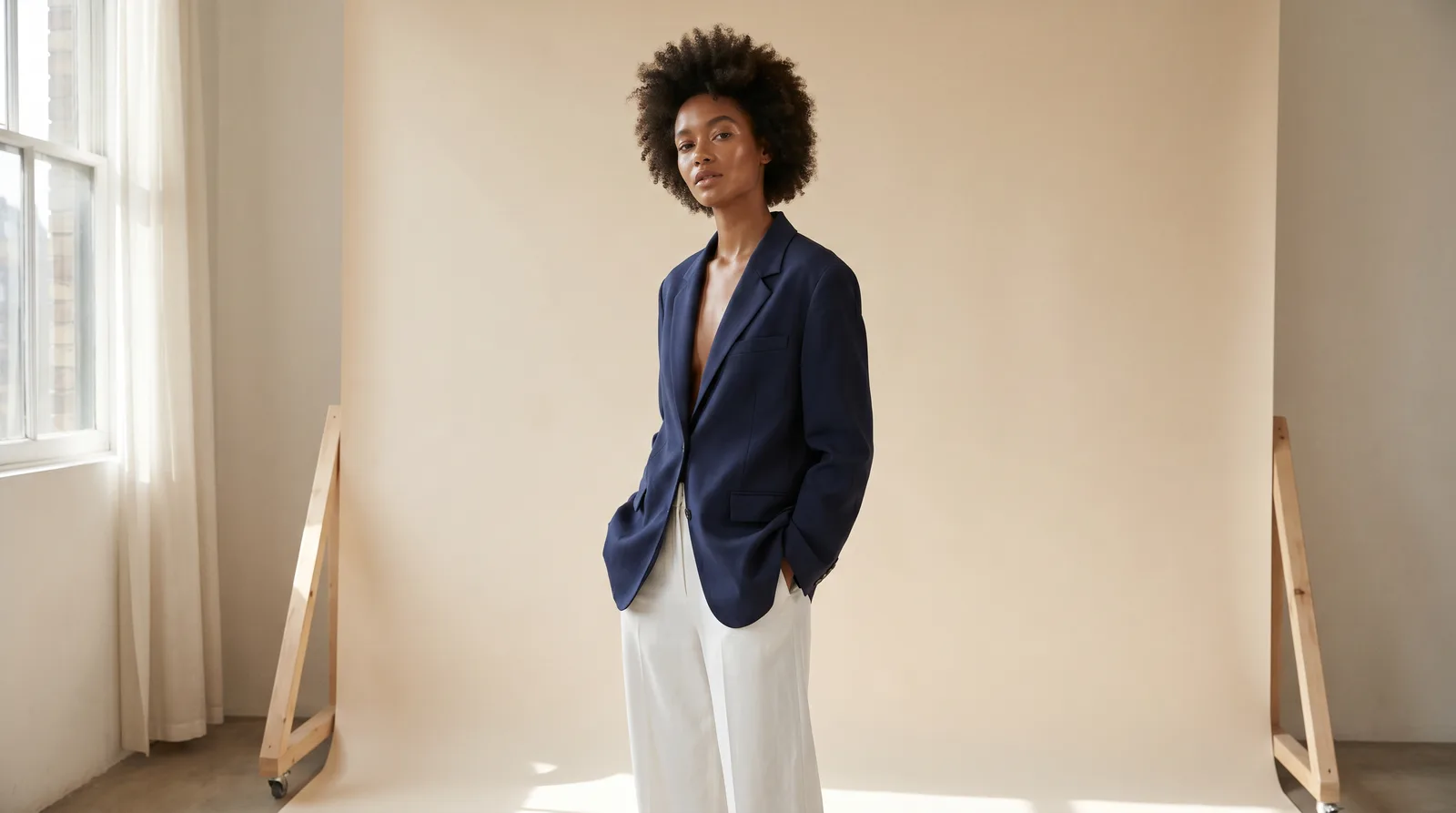
Photoroom vs Milano AI for Fashion Photos (2026)
Photoroom is brilliant at background removal, batch edits, and mobile. Milano AI is built to generate on-model fashion imagery and full catalogs. Here's how to pick — and why they work better together.
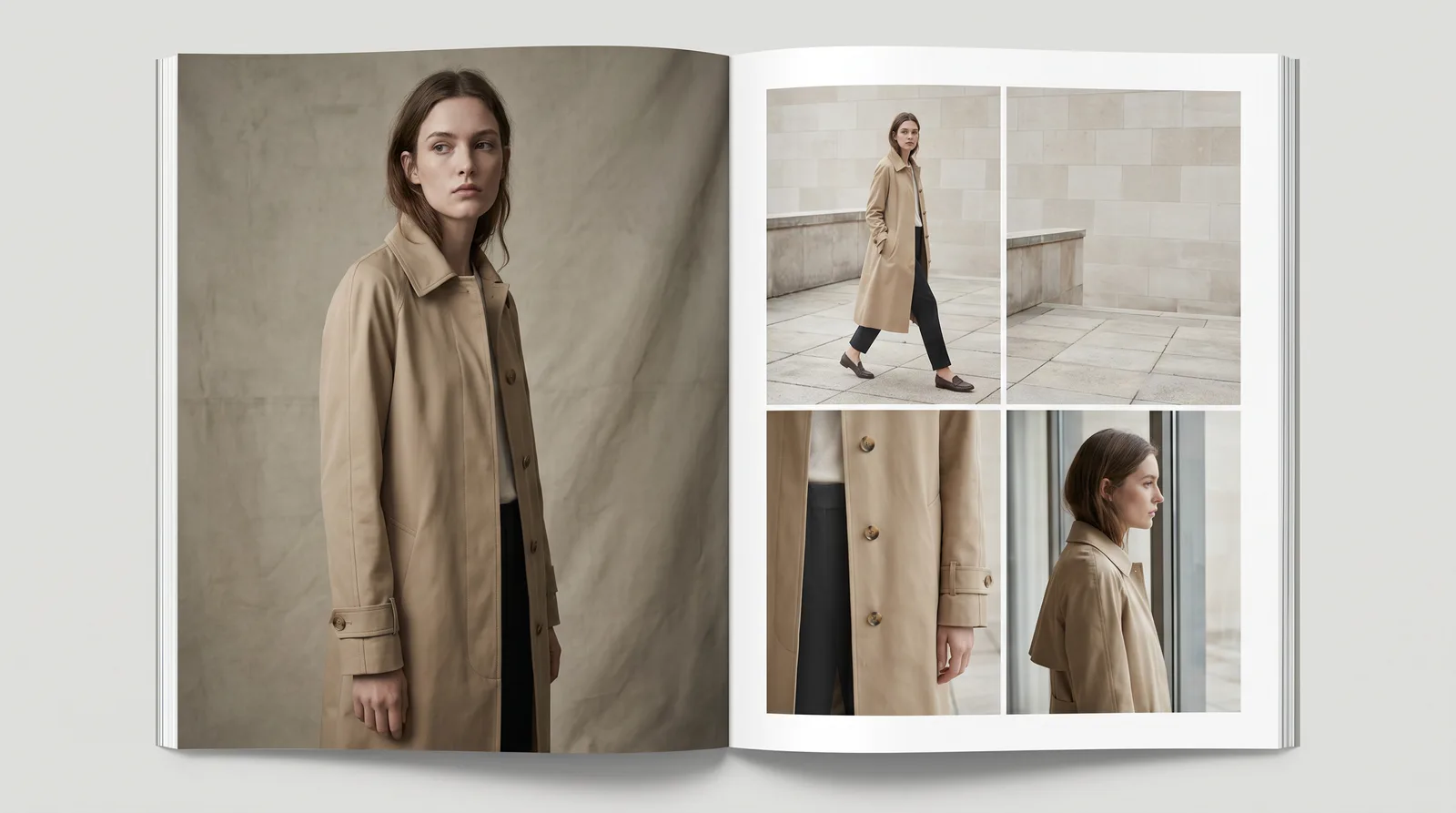
ChatGPT vs Milano AI for Fashion Photos (2026)
ChatGPT can make a product image. But can it run a fashion catalog? An honest comparison of ChatGPT and Milano AI for brands that sell clothing.