AI-Generated Models for Fashion: How Brands Use Virtual Models in 2026
What AI-generated models are, how brands like Zalando and H&M actually use them, the real cost math vs a traditional shoot, the Fashion Nova discussion, and the 2026 disclosure rules.
The model is now a setting, not a booking
For most fashion brands, the model is the most expensive thing in the photo. An agency model runs $600–$3,000 per day before the 20% booking fee, and that's before the photographer, the studio, hair and makeup, and the retoucher show up on the same invoice. So brands shoot less than they should — fewer angles, fewer SKUs on a body, one campaign look per season.
AI-generated models change that math. Instead of booking a person, you choose or describe one: skin tone, age range, body type, pose, mood. The platform puts your real garment on that model and outputs catalog or campaign imagery in minutes. The model never cancels, never ages out of the brand, and looks identical across every product in your collection.
This guide covers what AI-generated models actually are, how brands from Zalando to H&M are using them in 2026, what the Fashion Nova discussion taught everyone, the real cost comparison, and the disclosure rules you need to know before you publish.
What are AI-generated models?
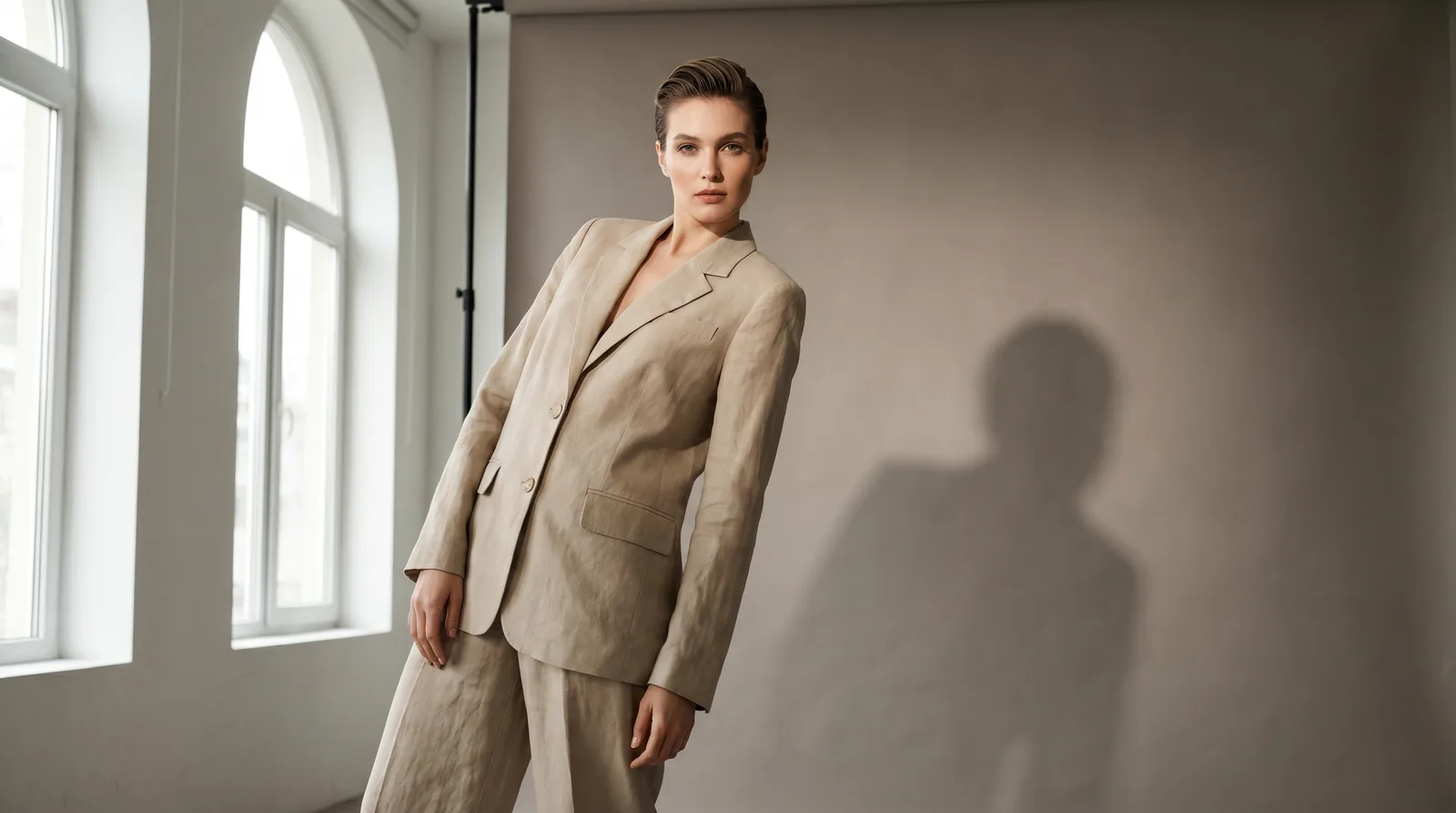
AI-generated models (also called virtual models or digital models) are photorealistic people created by AI for fashion imagery — they don't exist in real life, but they wear your real clothes in product photos, campaign images, and ads. You provide a garment photo; the system generates a model wearing it, in a scene and format you choose.
Two things distinguish them from generic AI art. First, the garment is real: a good system preserves the actual color, fabric, fit, and details of your product — it's your inventory on a generated body, not an invented outfit. Second, the model is reusable: the same face and body can wear your entire catalog, which is what makes the result feel like one brand instead of fifty stock photos.
Virtual models sit alongside a related technique — digital twins, where a real, contracted model licenses an AI replica of themselves. H&M made headlines in 2025 by creating digital twins of around 30 real models, with consent and compensation. Most e-commerce use, though, is fully synthetic models that resemble no real person.
How do fashion brands use AI-generated models?
Brands use AI-generated models anywhere they need on-body imagery at volume: product detail pages, marketplace listings, paid ads, email, and social. The economics are most dramatic in e-commerce, where a catalog needs hundreds of consistent on-model images, not one beautiful editorial shot.
The adoption is no longer fringe. Zalando, Europe's biggest fashion platform, has said AI produces around 70% of its editorial imagery, cutting production from 6–8 weeks to 3–4 days and reducing costs by roughly 90%. Mango ran a fully AI-generated campaign for its teen line back in 2024. Levi's tested AI models as early as 2023, framing it as a way to show garments on more body types.
For a typical DTC or marketplace brand, the use cases look like this:
- Product pages. Every SKU shown on a model — front, back, detail — instead of only your bestsellers.
- Marketplace listings. On-model main images for Amazon and Shopify stores, which consistently outconvert flat lays.
- Paid ads. Five creative directions for Meta and TikTok from one garment photo, tested before you commit budget.
- Size and body diversity. The same garment on multiple body types without multiplying the shoot budget.
- Pre-launch content. Campaign imagery ready before stock physically arrives.
For full campaign creative built around virtual models, see our AI fashion campaign generator guide.
Are AI models replacing human models?
For e-commerce volume work, increasingly yes; for editorial, brand campaigns, and runway, no. The honest answer is that AI is absorbing the high-volume, low-glamour end of modeling — catalog shots, marketplace listings, ad variations — while human models still own the work where a real person's presence is the point.
A flagship brand campaign, a celebrity collaboration, an influencer partnership, a runway show — these run on human charisma and human stories, and an AI model adds nothing there. Fabric in motion, real-world fit on a moving body, and the trust that comes from a recognizable face are still things a camera and a person do better.
The industry is also building guardrails rather than just surrendering. New York's Fashion Workers Act, in effect since June 2025, requires explicit written consent before anyone creates a digital replica of a real model. H&M's digital-twin program pays the models whose likenesses it uses. The direction of travel is clear: synthetic models for volume, real models for moments, and consent plus compensation when the two overlap.
Is Fashion Nova using AI models?
Fashion Nova has not made a formal announcement, but in 2025 shoppers on TikTok and X flagged product images on its store that showed classic signs of AI generation — overly smooth skin, glitchy hands, and an unnaturally uniform symmetry across "different" models. Industry coverage treated it as a quiet rollout spotted by customers rather than announced by the brand, and similar reports surfaced about Forever 21.
The discussion matters less for the gossip and more for the two lessons it taught everyone:
- Customers notice. Bad AI gets spotted and screenshotted. If the hands are wrong or the skin looks like plastic, the story becomes the AI, not the clothes. Quality is not optional.
- Silence reads as hiding. The backlash centered on the quiet part. Compare that with Guess, which ran AI-generated model ads in Vogue's August 2025 issue with a small-print disclosure — controversial, but on the record. Brands that disclose control the narrative; brands that get caught don't.
The takeaway for any brand considering virtual models in 2026: use a tool good enough that the garment and the model hold up to zoom, and be straightforward about it.
How much does an AI model photoshoot cost vs a real one?
A traditional on-model e-commerce shoot costs $80–$250 per finished image once you divide a fully staffed production day across its output; an AI model shoot runs roughly $0.50–$3 per image. For a 100-SKU catalog with three on-model images each, that's the difference between $24,000–$45,000 and a few hundred dollars.
Here's where the traditional number comes from, using 2026 market rates:
- Photographer: $1,000–$3,500 per day
- Agency model: $600–$3,000 per day, plus a ~20% agency booking fee
- Studio rental: $300–$2,000 per day
- Hair & makeup: $400–$1,500; stylist: $500–$1,500
- Retouching: $25–$80 per image
A standard production day lands at $2,500–$10,000 and yields roughly 40–80 finished images. A reshoot — because a garment arrived late or the color drifted in post — costs another $3,000–$8,000 day. And if you want unlimited, permanent usage of a model's images, a full buyout can run $5,000–$15,000+.
| Traditional model shoot | AI model shoot | |
|---|---|---|
| Cost per finished image | $80–$250 (up to $1,500 editorial) | $0.50–$3 |
| Time to first image | 2–8 weeks (booking → retouch) | Minutes |
| Model cost | $600–$3,000/day + 20% agency fee | None |
| Studio & crew | $2,500–$10,000/day | None |
| Usage rights | License terms; buyouts $5,000–$15,000+ | Yours, no buyout |
| Consistency across catalog | Re-book same model, same crew | Same model on every SKU, automatically |
| Reshoots | New shoot day: $3,000–$8,000 | Regenerate instantly |
| Best for | Flagship campaigns, brand moments | Catalogs, listings, ads, testing |
Bottom line: the traditional shoot still wins the brand moment. The AI model wins everything that needs to exist in volume — and that's 90% of the images a fashion brand publishes. See our pricing for what that volume actually costs.
How do you put your clothes on an AI model?
You upload a photo of the real garment, pick or describe a model, choose a scene and format, and generate — the platform keeps the garment accurate while building the model and setting around it. No 3D scanning, no mannequin rig, no design files. Here's the workflow in practice:
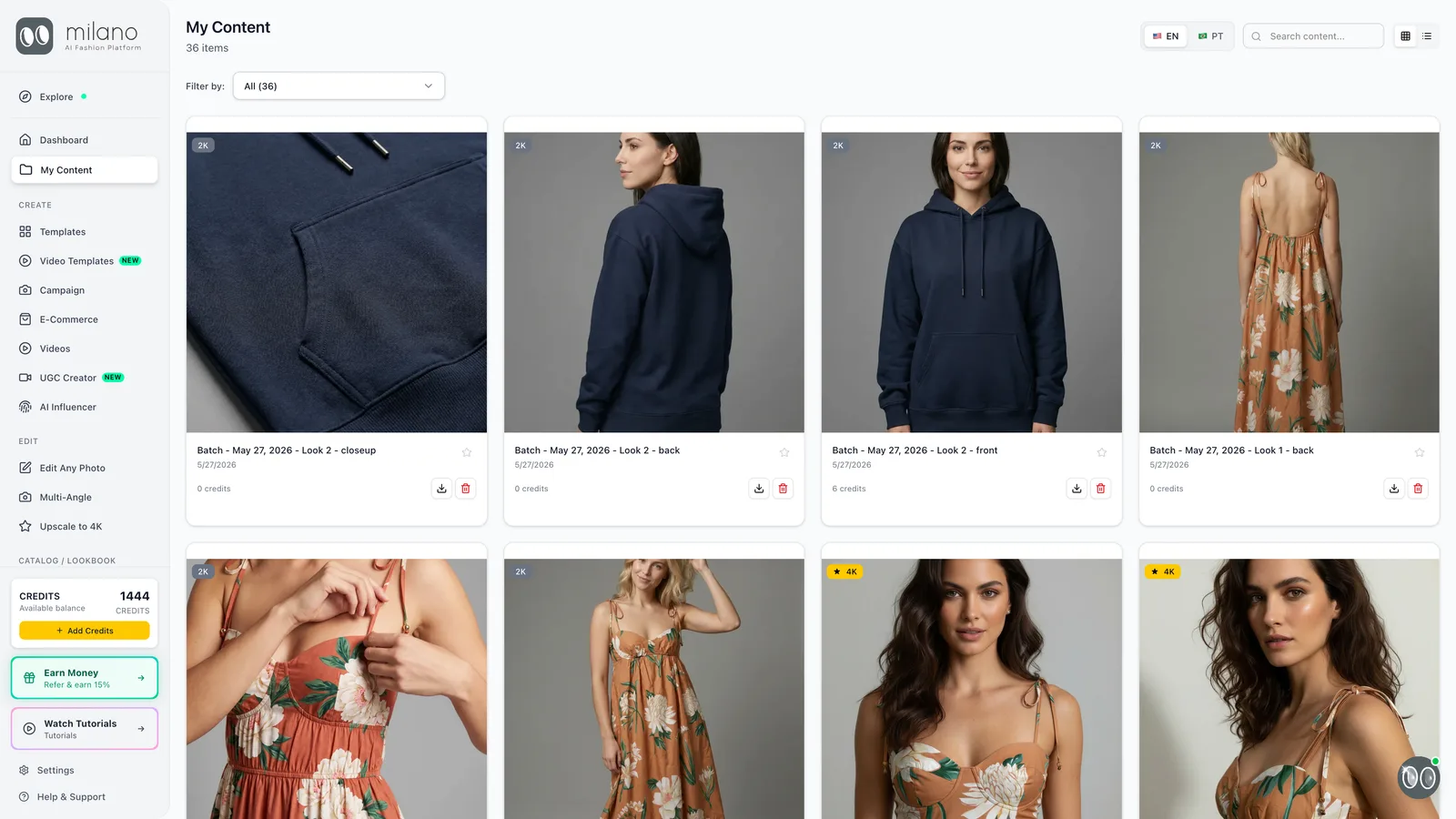
- Upload your garment photo. A clear shot is all you need — on a hanger, a flat lay, a mannequin, or worn by anyone. Add detail references for anything the eye must trust: prints, buttons, embroidery, hardware.
- Choose or describe your model. Pick from a gallery for speed, or specify skin tone, hair, age range, body type, and pose when the brand needs a precise feel. Save the model to reuse across your whole catalog.
- Set the scene and format. Clean studio for marketplace listings; lifestyle scene for ads and social. Generate in 9:16, 1:1, 4:5, and 16:9 so each channel gets a native crop.
- Generate and check the garment first. Color, fabric, silhouette, details — in that order. If the product isn't faithful, nothing else matters. Keep the winners, regenerate the rest.
- Scale it. Run the same model and scene across the rest of the collection so the catalog reads as one brand.
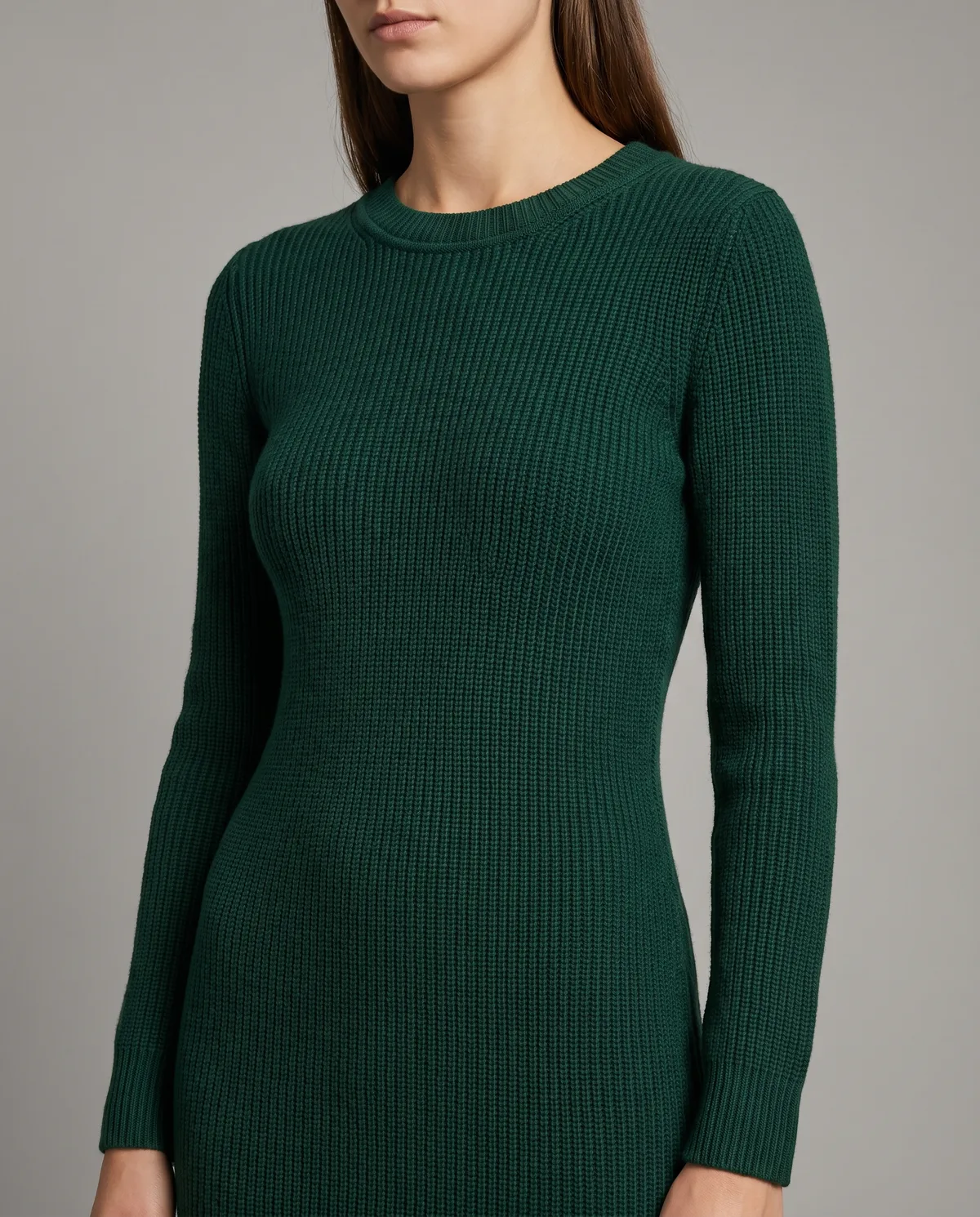
For the step-by-step on-model workflow with source-photo tips, see how to create a virtual try-on.
Are AI-generated models legal — and do you have to disclose them?
Using fully synthetic AI models is legal, but disclosure rules are tightening fast in 2026, and two specific risks matter. The legal picture in plain terms:
- EU AI Act (Article 50), in force August 2, 2026. Photorealistic AI-generated imagery of people falls under the Act's transparency obligations: content must carry machine-readable marking as AI-generated, and deployers must disclose artificially generated or manipulated content that could pass as real. Fines reach €15 million or 3% of global turnover. If you sell into the EU, this applies to you.
- New York's Fashion Workers Act (since June 2025). Creating a digital replica of a real model requires their explicit written consent. Fully synthetic models that resemble no real person aren't covered — but "inspired by" a recognizable face is exactly the line you must not cross.
- Right of publicity. Independent of any AI law, a generated model that looks like an identifiable person invites false-endorsement and publicity-rights claims. Use models that are genuinely synthetic.
- The product must be real. Consumer-protection law everywhere requires the image to faithfully represent the item. An AI image that alters the garment isn't just bad practice; it's a returns machine and a legal exposure.
Bottom line: synthetic model, real garment, clear disclosure. A simple "image generated with AI" note satisfies the spirit of every rule above, costs you nothing, and — as the Fashion Nova episode showed — protects the brand more than silence does.
What is the best AI model generator for fashion?
It depends on what you're producing. General image tools like ChatGPT or Midjourney are genuinely good at one-off concepts — a mood image, a mockup, a creative exploration — and if that's all you need, they're the cheapest path. The gap appears at catalog scale: keeping your real garment accurate, and keeping the same model identical across fifty SKUs, is what general tools can't hold.
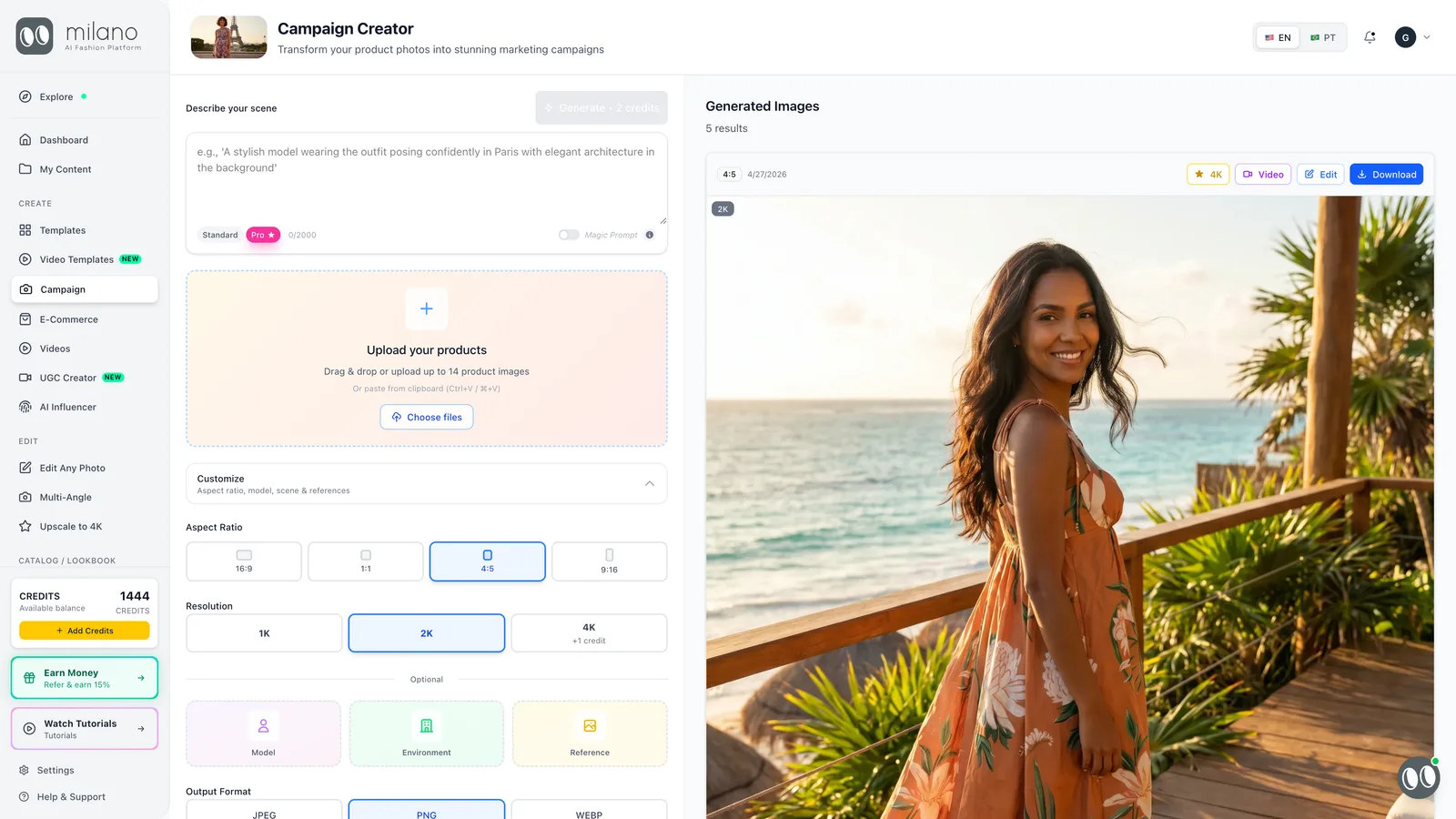
That's the job Milano was built for. Where it's strongest:
- Garment fidelity. The generation is anchored to your product photo — color, fabric, and details survive, which is the whole point of a product image.
- Reusable models. Create a model once and put your entire collection on her. The catalog reads as one campaign, not a collage.
- Full output, not one image. Catalog sets, campaign imagery, every aspect ratio per channel — the complete asset kit around the model, in one place.
- Marketplace-ready. Clean studio formats that meet listing standards on Amazon and your Shopify store.
And where it isn't the answer: a flagship brand film, a celebrity face, fabric physics in motion — book the real shoot. The right setup for most brands in 2026 is both: real production for the one campaign that defines the season, AI models for the hundreds of images that sell it every day.
Tips for better results
- Save one model and reuse her across the whole collection — consistency is what makes virtual models read as a brand, not a trick.
- Upload detail references for anything a customer will zoom on: prints, stitching, hardware.
- Check the garment before the scene. Color and silhouette fidelity first; backgrounds are easy to regenerate.
- Generate every channel's format in the same session — 9:16, 1:1, 4:5 — instead of cropping one asset badly four times.
- Add a simple AI disclosure line. It's about to be law in the EU, and it's already good practice everywhere.
How do real fashion brands use Milano AI for catalogs, colorway swaps, and video?
Fashion and footwear brands use Milano AI Enterprise and self-serve studios to turn raw sketches, store mannequin photos, and single-sample phone shots into full e-commerce catalogs and AI fashion videos in days instead of months — cutting production costs by 80–95% while keeping every seam, print, and colorway exact.
- Lacoste Brasil (3,119 lookbook images in 4 weeks): Reconstructed 6–20 KB line sketches into 2K studio product and on-model lookbook photos across 8 categories with zero physical photoshoots (see the Lacoste case study).
- Loft Style (1,300+ catalog images across 9 drops): Converts monthly PDFs of store mannequin photos into 5 consistent views (concept, front, back, and close-up details) on one exclusive virtual fashion model in ~3 days per drop (see the Loft Style case study).
- Usaflex Footwear (30 days reduced to 1 hour): Photographs a single shoe sample and uses AI colorway swapping to generate every catalog color and angle in 1 hour instead of 5 Photoshop retouchers working for 30 days (see the Usaflex case study).
- Video Pro (Milano One & Milano Max): Turns any static garment or on-model photo into 10-second 4K Reels with sound (Milano One) or up to 30-second multi-scene campaign films with camera moves and a speaking model in English or Portuguese (Milano Max — watch the Video Pro tutorial).
Frequently Asked Questions
Photorealistic people created by AI to wear real garments in fashion imagery — product pages, ads, and campaigns. The clothes are your actual products; the model is synthetic and reusable across your whole catalog.