
Product Photography Tips That Cut Costs 95% While Boosting Conversions
Fashion brands waste $5,000-25,000 per photoshoot while struggling to create enough content. Learn the strategic product photography system that cuts costs 95% while boosting conversions—from lighting and styling fundamentals to AI-powered scaling with Milano AI. Actionable tips for e-commerce decision-makers ready to transform photography from expense to competitive advantage.
Your fashion pieces look incredible in person, but your product photos tell a different story. Low click-through rates, abandoned carts, and endless customer questions about fit and color signal a critical problem: your product photography isn't converting browsers into buyers. The solution isn't hiring expensive photographers or building elaborate studios—it's implementing a strategic system that delivers professional results at a fraction of traditional costs.
The Real Problem: Great Products, Weak Visual Strategy
Fashion e-commerce brands face an impossible equation in 2026. Marketplaces demand 7-10 images per SKU. Social platforms require daily fresh content. Paid ads need endless variations for testing. Traditional photoshoots cost $5,000-25,000 and take weeks to deliver.
The result? Brands either overspend on content production or compromise quality—both paths lead to lost revenue. Your competitors with better product photography capture the sales you're missing, regardless of product quality or pricing.
Solution Framework: Strategic Photography That Drives ROI
Professional product photography isn't about expensive equipment—it's about implementing a repeatable system focused on conversion metrics. This guide provides actionable strategies for fashion brands to create marketplace-ready imagery that sells, whether shooting in-house or managing external teams.
1. Start With Business Strategy, Not Camera Settings
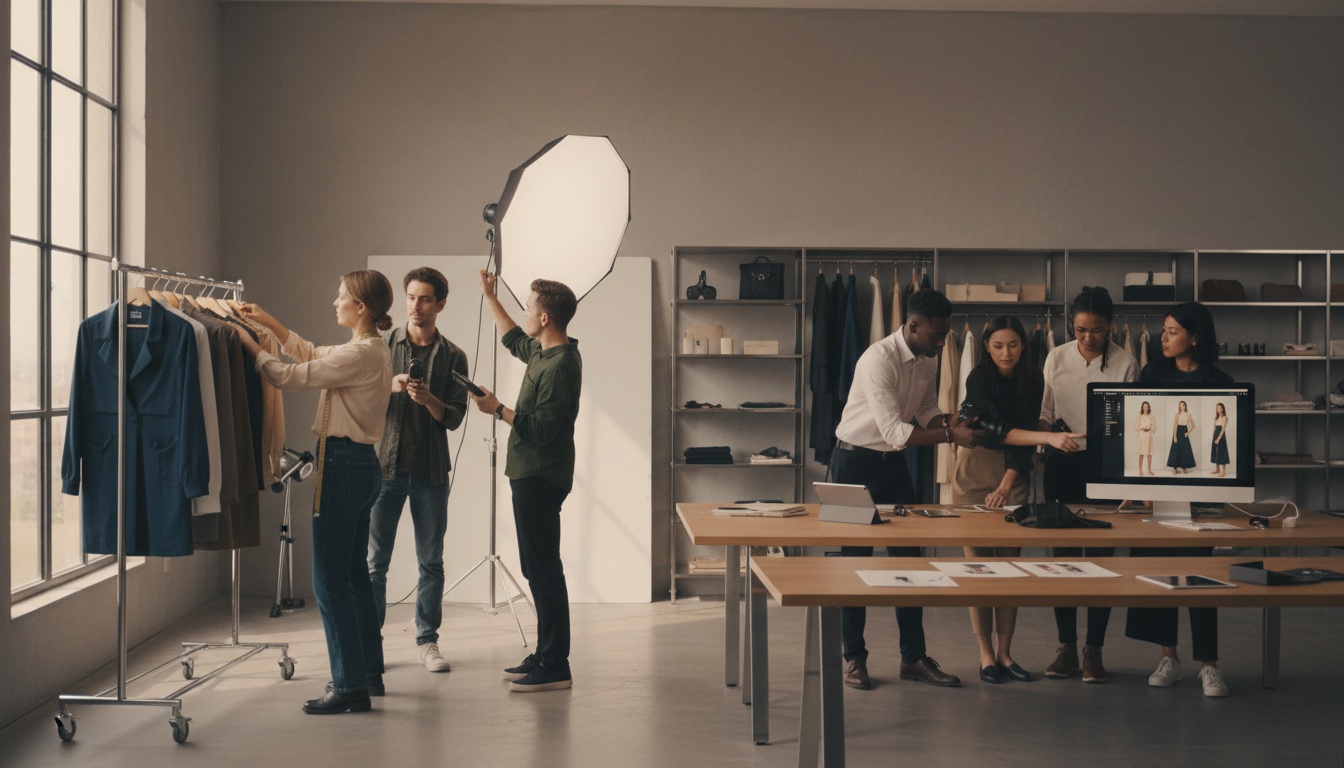
Before touching equipment, define what each image must accomplish for revenue. Create structured shot lists per SKU: full front/back views, detail shots (fabric texture, hardware, stitching), on-model fit demonstrations, lifestyle contexts, and scale references. Document this in spreadsheets for seasonal replication.
Critical insight: Match aspect ratios to distribution channels from the start. Vertical 9:16 for social and paid ads, square 1:1 for feeds, horizontal 16:9 for hero banners. Strategic framing eliminates costly reshoots and awkward cropping.
2. Master Lighting For Consistent Quality
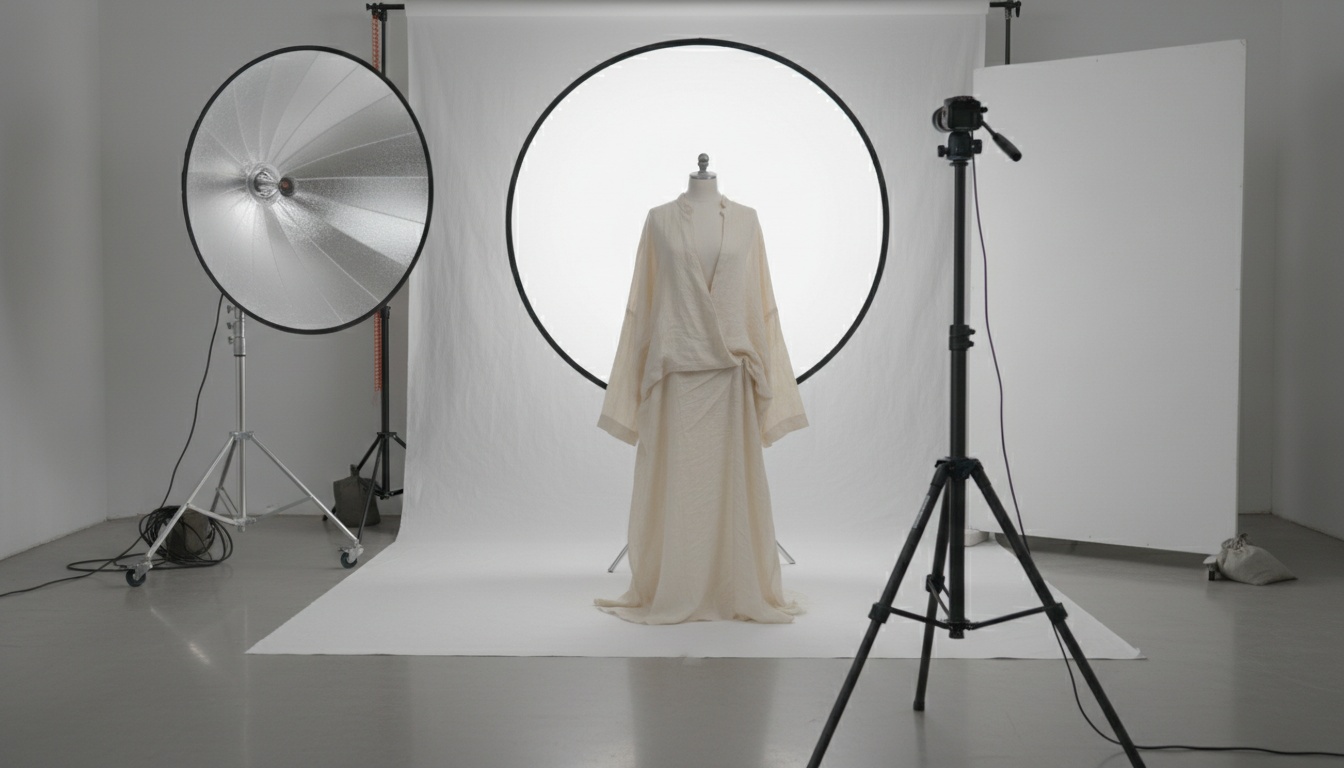
Lighting determines whether fabrics look premium or cheap, colors appear accurate or distorted. Implement one standardized approach: soft, diffused lighting at 45° angles creates natural shadows while preserving texture.
Budget-friendly setup: Position products near large windows with indirect light, using white curtains for diffusion and foam boards as reflectors. For artificial lighting, one softbox as key light plus opposite-side reflector delivers professional results. Mark positions with floor tape and document settings for perfect consistency across shoots.
3. Build Backgrounds That Support Conversion
Clean, neutral backgrounds (white, light gray) keep focus on products for e-commerce listings and marketplace requirements. Reserve bold environments exclusively for campaign content and social media where brand storytelling matters more than product clarity.
Document exact background specifications—color values, textures, brand guidelines—ensuring visual consistency even when multiple photographers or teams are involved.
4. Style For Clarity, Not Just Aesthetics
Every garment must be steamed, properly fitted, and styled to answer customer questions: How does it fit? How does fabric drape? What are styling options? Use clips and pins to show true shape, but avoid over-styling that confuses what's actually for sale.
Pro strategy: Think in image series, not single shots. Across 7-10 images per product, systematically answer fit, fabric, color, detail, and styling questions that prevent purchase hesitation.
5. Shoot With Technical Precision
Manual camera control ensures consistency. Target ISO 100-400 for noise-free images, aperture f/8-f/11 for full-garment sharpness, and tripod-stabilized shots for identical framing across product categories. This technical precision creates the professional, cohesive look that builds brand trust.
Capture multiple angles and variations—slight perspective changes dramatically impact how garments read online. Review shots on larger screens during shoots to catch issues before completing entire collections.
6. Prioritize Color Accuracy And Texture
Color mismatches destroy customer trust and increase returns. Set custom white balance using gray cards, monitor histograms to prevent blown highlights, and angle lighting to reveal fabric texture. Premium materials photographed with flat lighting look cheap—strategic light direction showcases quality.
7. Edit For Truth, Not Illusion
Post-production refines reality rather than fabricating it. Create standardized presets for exposure, contrast, and color balance across product lines. Remove temporary defects (lint, threads) but never reshape garments or models beyond realistic expectations. Over-retouching increases returns and damages long-term brand credibility.
Optimize file names and alt text with product attributes for SEO: "women-linen-wrap-dress-sage-green-front-view" improves organic search while maintaining fast page speeds.
How Milano AI Transforms Product Photography Economics
Even with optimized traditional photography, fashion brands hit scalability walls. Milano AI eliminates these constraints entirely by transforming simple product shots into complete visual ecosystems—lifestyle campaigns, marketplace-optimized images, social content, and video—in minutes instead of weeks.
Strategic advantages for fashion decision-makers:
- 95% cost reduction: $199/month unlimited creation vs. $5,000-25,000 per traditional shoot
- Instant scalability: Generate 500+ variations per SKU for A/B testing across channels
- Marketplace optimization: Automated white backgrounds, ghost mannequin effects, and platform-specific formatting
- Campaign velocity: Launch complete seasonal collections in hours, not months
- Consistent brand aesthetic: AI learns your visual standards and applies them across unlimited content
Milano AI isn't replacing your photography strategy—it's executing it at scale impossible with traditional methods. Your shot lists, styling guidelines, and brand standards become automated systems generating professional content 100x faster.
Ready to transform product photography from cost center to competitive advantage? Start with 10 free credits—no credit card required. See how Milano AI turns your strategic photography framework into unlimited, conversion-optimized content.
Frequently Asked Questions
The most critical tips are: (1) Create structured shot lists covering all angles—front, back, details, on-model, and lifestyle contexts, (2) Use consistent, soft lighting at 45° angles to show fabric texture accurately, (3) Maintain clean backgrounds for marketplace listings while reserving styled environments for campaigns, (4) Shoot with manual settings and tripods for technical consistency, (5) Prioritize color accuracy with custom white balance, and (6) Edit for clarity, not illusion. The key is implementing these as a repeatable system, not one-off creative decisions.
Scale Your Fashion E-Commerce with AI
Create professional campaigns and product photography in minutes. Start with 10 free credits—no credit card required.
Related Articles
Professional Product Videos with AI: The Ultimate Q&A Guide for Fashion Brands
Learn how fashion e-commerce brands can create professional product videos with AI, replacing expensive photoshoots with automated video generation. This Q&A guide covers AI avatars, conversion optimization, and scaling video content across your entire catalog—cutting costs by 95% while accelerating production from weeks to minutes.

AI Lifestyle Videos: Compare Top Tools for Fashion Brands in 2026 | Milano AI Guide
Compare top AI lifestyle video tools for fashion e-commerce in 2026. Detailed analysis of Synthesia vs HeyGen vs Runway ML vs Pika Labs vs Milano AI. Learn which platforms deliver ROI for DTC brands, with actionable implementation strategies and cost comparisons. Cut video production costs by 95% while scaling output 10x.

Marketplace Video Optimization: How Fashion Brands Scale Conversions 30%+ in 2026
Fashion brands see 30%+ conversion lifts with optimized marketplace videos, but manual production fails at scale. Learn the cause-and-effect strategies driving success on Amazon, Etsy, and Shopify in 2026—from AI compression eliminating load penalties to shoppable overlays converting views into sales. Complete guide with actionable tactics for DTC brands and retailers.