
Other AI Solutions vs Milano AI: 11 Things Fashion Brands Get Wrong (And How to Fix Them)
Most AI solutions were built for general enterprise workflows, not fashion e-commerce realities. This listicle breaks down 11 critical differences between typical AI tools and Milano AI—from fashion-first design to business-wide transformation. Learn why fashion brands need a complete operating system, not another point solution.
If you run a fashion e-commerce brand right now, you're probably drowning in AI options: AI agencies in Milan, generic "AI suites," marketing tools, automation platforms, AI editors, analytics dashboards…the list never ends. The bad news: most of these solutions were built for general enterprise workflows—not for the realities of fashion e-commerce. The good news: once you know what to look for (and what to avoid), it becomes much easier to choose tools that actually move revenue, not just generate "cool" demos.
1. General AI Agencies vs. Fashion-First AI
Most AI agencies optimize pipelines, governance, and model deployment. They build data platforms and integrate AI into CRMs and ERPs. Useful, but if you're selling dresses or sneakers, your core problems are different: "How do I produce campaign-level visuals for every drop—without a photoshoot?" Milano AI is built specifically for fashion and e-commerce, so the starting point isn't "How do we deploy a model?" but "How do we sell more product with better content at lower cost?"
2. Point Solutions vs. a Single Operating System
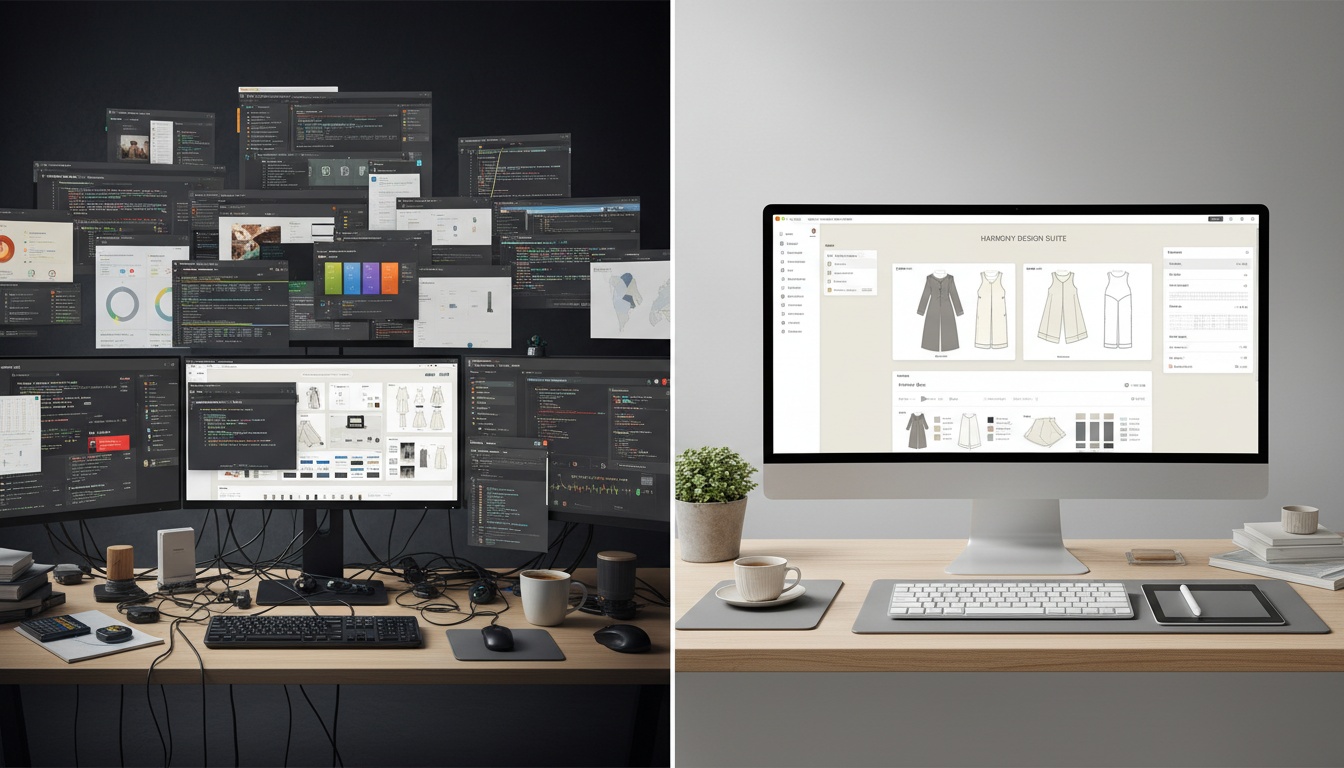
Most AI tools do one thing well: strategy, deployment, chatbots, or analytics. For fashion brands, this leads to a familiar mess—one tool for design, another for editing, another for video, another for social scheduling. Multiple vendors, overlapping invoices, disconnected data. Milano AI is positioned as the operating system for fashion e-commerce—a single platform managing visual content creation, catalog imagery, marketing automation, search visibility, and analytics within one environment built for apparel and retail.
3. "AI-Ready" Data vs. "Upload Your Products and Go"
Many AI agencies start with long discovery phases: mapping systems, defining infrastructure, running pilots. This is overkill for indie labels or mid-market fashion brands that need output now. With Milano AI, the workflow is direct: bulk upload SKUs, generate ready-to-use visual content in minutes. No data engineering project needed. Plain-English prompts instead of complex configuration.
4. Generic AI Image Tools vs. Fashion-Grade Visual Systems
Most general AI image generators produce cool visuals, but not necessarily commerce-ready assets. They don't understand styling, fit, and garment details. Milano AI is tuned for fashion output: transform plain product shots into full campaign imagery, produce white background and ghost mannequin images at scale, generate unlimited variations for every SKU. The result: images that not only look beautiful but convert on product pages, marketplaces, and ads.
5. Manual Editing vs. Natural-Language Creative Control
Traditional editors require layer-based editing and complex UIs. The Milano AI photo editor is built for non-technical fashion teams: give instructions in plain English like "Remove the background and replace it with a minimalist studio" or "Change the dress from red to emerald." AI handles the heavy lifting while keeping professional, studio-grade quality.
6. Content Agencies vs. Always-On AI Marketing Engine
Many agencies emphasize campaign planning and periodic content delivery, leaving you with slow production cycles, high retainers, and limited flexibility. Milano AI brings a self-serve marketing automation suite: launch full video campaigns, create AI avatar videos, generate daily SEO-optimized blog content, automate social posts, design interactive catalogs—all from one place.
7. "We Build for Everyone" vs. "We Learn Your Brand Aesthetic"
Most AI companies are industry-agnostic, working with banks, logistics, and retail with the same core tooling. Milano AI is intentionally narrow: built exclusively for fashion and e-commerce brands, designed to learn your brand aesthetic over time, keeping content consistent across catalog, campaigns, and social—so everything looks like your brand, not a generic template.
8. Technical Integrations vs. Revenue-Focused Workflows
Other AI platforms integrate with CRMs, ERPs, and data warehouses—valuable for large enterprises, but fashion brands need a more direct connection to revenue. Milano AI is optimized for conversion and visibility across e-commerce storefronts, social channels where fashion audiences live, and search engines and AI recommendation systems that increasingly influence discovery.
9. Long Projects vs. Weeks-Turned-into-Minutes
With typical AI agencies, you see 3-6 month projects just to get to first deployment. Milano AI is engineered to collapse those timelines: cut content costs by up to 95%, scale production by up to 10x, turn workflows that took weeks into minutes with AI-powered creation.
10. Narrow Impact vs. Business-Wide Transformation
Many tools solve a narrow slice: a chatbot here, a dashboard there. Milano AI touches nearly every part of your fashion e-commerce engine: creative (campaign visuals, product imagery, video), content (SEO blogs, product descriptions), marketing (social scheduling, live shopping), and intelligence (competitor insights, AI search ranking). Instead of stacking 5-10 separate solutions, you centralize everything in one AI-native platform tuned to your category.
11. How Milano AI Helps Your Fashion Brand Right Now
For indie labels: skip expensive studio shoots, upload product images and generate complete catalogs in minutes. For DTC and mid-market brands: standardize visual quality across channels, automate repetitive creative work, launch campaigns faster. For Shopify/WooCommerce owners: transform basic photos into high-end visuals, generate SEO-optimized content. For agencies: produce client-ready content at scale from one platform, maintain each client's brand aesthetic while massively increasing output.
Most AI tools help you experiment. Milano AI is built to help you operate—to run your fashion e-commerce brand end-to-end, from content to campaigns to intelligence, with one AI-powered platform that speaks your language and understands your industry.
Frequently Asked Questions
Milano AI is built exclusively for fashion and e-commerce, not general enterprise workflows. Unlike generic AI tools or agencies that focus on infrastructure, Milano AI solves fashion-specific problems: producing campaign visuals without photoshoots, keeping product imagery fresh across channels, and creating content that ranks on Google and AI search. It's a complete operating system managing content creation, marketing automation, and analytics in one platform—not a point solution requiring multiple vendors.
Scale Your Fashion E-Commerce with AI
Create professional campaigns and product photography in minutes. Start with 10 free credits—no credit card required.
Related Articles

Other AI Solutions vs Milano AI: What Fashion E-Commerce Brands Need to Know in 2026
Milan hosts 100+ AI companies, but only Milano AI was built specifically for fashion e-commerce. Compare generic AI solutions (chatbots, analytics, custom development) against Milano AI's complete platform: visual content automation, marketing suite, and business intelligence. See why fashion brands choose integrated systems over fragmented tools, cutting costs 95% while scaling 100x faster.

Fashion Photography AI: The Cause-and-Effect Revolution Transforming E-Commerce Imagery in 2026
Fashion photography AI breaks the traditional cause-and-effect chain of expensive, slow photoshoots. Discover how AI transforms 2-4 week production cycles into 30-second generation times, cuts costs by 95%, and creates unlimited creative variations—fundamentally restructuring fashion e-commerce content strategy with measurable ROI.

Leonardo AI vs Milano AI: Which Platform Wins for Fashion E-Commerce in 2026?
Leonardo AI vs Milano AI: Complete 2026 comparison for fashion e-commerce decision-makers. Leonardo AI offers general image generation ($152K-$706K annual costs). Milano AI provides complete business operating system with 97-98% cost savings ($7K-$26K annually), replacing photoshoots, agencies, marketing automation, and analytics. Real ROI calculations, workflow comparisons, and strategic guidance for CMOs, e-commerce directors, and fashion brand founders choosing between incremental tools and transformational platforms.