
Marketplace Product Optimization: Traditional vs AI-First Workflows for Fashion Brands
Fashion brands lose 60-70% of marketplace sales to poor optimization. While competitors spend weeks on manual listings, AI-first brands deploy optimized content across Amazon, Zalando, and ASOS in hours. Learn the complete playbook comparing traditional vs AI-first workflows, with actionable strategies for titles, images, attributes, and scaling.
Fashion brands lose 60-70% of potential marketplace sales due to poor listing optimization. While competitors spend weeks manually creating channel-specific content, AI-first brands deploy optimized listings across Amazon, Zalando, and ASOS in hours—not weeks. This complete playbook reveals how marketplace product optimization separates winners from invisible brands in 2025's hyper-competitive fashion e-commerce landscape.
Why Marketplace Product Optimization Is a Different Game for Fashion
Marketplaces are not your DTC store. Algorithms prioritize listing completeness, relevance, and performance metrics over brand recognition. A luxury label with incomplete attributes ranks below a no-name competitor with optimized listings.
Fashion listings face unique complexity: sizes, fits, colors, fabrics, and high return rates create optimization challenges gadget sellers never face. In 2025, "optimization" means mastering keyword strategy, conversion-driving visuals, pricing dynamics, review management, and structured data simultaneously.
Benchmark reality: An unoptimized denim listing generates 2,000 impressions monthly with 0.8% CTR and 25% return rate. The same product, fully optimized, achieves 15,000 impressions, 3.2% CTR, and 12% returns. That's 7.5x visibility and half the returns—from optimization alone.

Channel-Native Optimization vs Copy-Paste Disaster
Most fashion brands copy product titles, bullets, and images from their website to every marketplace. High-performers rewrite everything to fit each platform's character limits, search behavior, and required fields.
What copy-paste brands do: Use broad categories like "Clothing," leave optional attributes blank, deploy English-only content globally, and wonder why visibility tanks.
What optimized brands do: Select precise categories ("Women › Dresses › Cocktail"), fill every attribute (fit, neckline, fabric), localize language and sizing per market, and treat each marketplace as a unique storefront with distinct rules.
Actionable first step: List your top 3 marketplaces. For each, document title limits, required apparel attributes, image specifications, and review policies. Identify where you're currently copy-pasting versus tailoring. Most brands discover they're compliant on zero platforms.
Listing Fundamentals: Compliance vs Search-Winning Content
Product Titles & Keywords
Basic approach: "Luna Dress" with no keyword research, written from intuition.
Optimized approach: "Luna Women's Satin Slip Midi Dress – Emerald Green, Bias Cut" with platform-specific keyword research integrating short-tail and long-tail terms into titles and backend fields.
Action items: Identify 5-10 non-branded keywords per hero product ("black oversized blazer," "wide leg jeans high waist"). Front-load highest-value keywords in titles. Use backend keyword fields instead of keyword-stuffing visible copy.
Descriptions & Bullet Points
Feature-dump style lists fabric, fit, and washing instructions with no hierarchy. Conversion-oriented copy leads with use cases, fit notes, and benefits: "desk-to-drinks tailored blazer that holds its shape all day."
Winning structure for fashion: (1) Opening hook—who it's for and where they'll wear it, (2) Fit and sizing clarity with model stats, (3) Fabric and feel—weight, drape, opacity, (4) Care and durability, (5) Styling ideas to drive AOV.
Attributes, Taxonomy & Structured Data
Algorithms rely on attributes like color, material, size, and pattern to match search intent. Under-optimized brands leave optional fields blank and choose generic categories. Fully optimized brands fill every relevant attribute (neckline, sleeve length, rise, heel height) and use correct product identifiers (GTIN/UPC).
Critical detail: Use market-native color naming. "Red" becomes "wine," "burgundy," or "brick red" aligned with actual shopper search language.
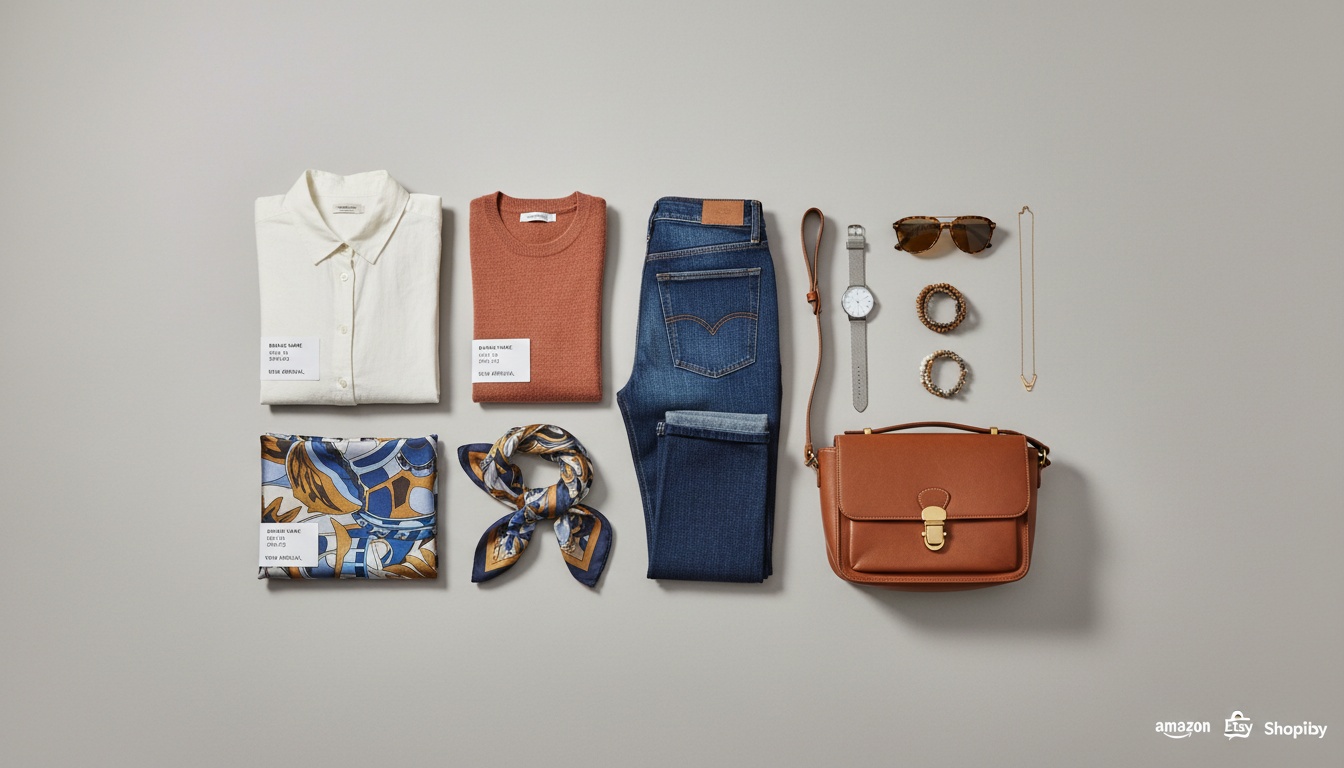
Visuals: White Background vs Conversion-Optimized Sets
Compliance-only visuals show a single front view on white with no back, detail, or on-body shots. Conversion-optimized sets mix white-background, on-model, close-ups, fit cues, and where allowed, 360° or short video.
Actionable image set: Primary—clean white background, full product, correct dimensions. Secondary—front, back, side, key details (fabric texture, closures, lining), on-model standing and in motion. Optional—360° spin or try-on clip if marketplace supports it.
Manual Workflows vs AI-First Workflows
Traditional manual workflow: Photograph products in studio, manually edit and crop per marketplace spec, write titles and descriptions from scratch for each channel, manually fill attributes across platforms, test ad-hoc when there's time.
AI-first workflow: Generate compliant white-background, lifestyle, and marketplace-optimized visuals from base shots using AI, create channel-specific titles and descriptions from single data source, use AI bulk editing for attributes and taxonomy, enable always-on optimization with AI surfacing underperforming SKUs.
Transition strategy: Start with one category and one marketplace. Move repetitive tasks first—background changes, size charts, attribute filling—into AI tools. Keep human oversight for brand voice, product claims, and pricing strategy.
How Milano AI Transforms Marketplace Product Optimization
Milano AI functions as your complete operating system for marketplace dominance, eliminating the manual bottlenecks that keep fashion brands invisible.
From One Photo to Marketplace-Ready Visual Sets
Transform core product photos into marketplace-compliant white-background images, lifestyle scenes matching each platform's aesthetic, ghost mannequin effects for clean apparel presentation, and short marketing videos—all from a single upload. Bulk process SKUs and generate unlimited variations to fill every image slot marketplaces offer, without additional photoshoots.
Faster, Smarter Listing Content Across Channels
Milano AI's AI-powered photo editor adjusts imagery in plain English to match specific marketplace guidelines. Create consistent, professional visuals indistinguishable from traditional photography. Generate SEO-optimized product narratives you adapt for marketplace descriptions, blog content, and campaigns—all reflecting your brand aesthetic while aligning with search and conversion goals.
Scaling Content Without Scaling Headcount
Create full e-commerce catalogs with white backgrounds, lifestyle images, and marketplace-optimized visuals from a single dashboard. Replace large portions of traditional creative teams and agencies for recurring marketplace content work. Cut content costs by 95% while increasing SKU volume and variations you can support.
Marketing leaders and e-commerce managers align marketplace listings with campaign themes and seasonal stories, keeping content fresh across channels with minimal manual effort.
One Operating System for Multi-Channel Fashion Commerce
Milano AI coordinates visual content for marketplaces, your store, and social platforms; SEO-optimized articles supporting marketplace discovery; and social campaigns driving external traffic to listings. Built exclusively for fashion, it understands category nuances—how to visually communicate fit, drape, and styling—while learning your brand aesthetic so content remains on-brand as you scale.
For indie labels: Compete with bigger players on imagery and listing quality without hiring full creative teams.
For marketing managers: Standardize marketplace optimization across regions and channels from a single platform.
For DTC founders: Turn weeks of content production into minutes of AI-powered work, moving faster than competitors while maintaining professional quality.
Conclusion: Marketplace Optimization Is Your Unfair Advantage
Marketplace product optimization separates visible, high-converting fashion brands from invisible competitors burning ad budget on unoptimized listings. Traditional manual workflows cannot match the speed, consistency, and scale required to win across Amazon, Zalando, ASOS, and emerging platforms simultaneously.
AI-first brands using Milano AI: Deploy optimized listings 10x faster, maintain consistency across channels, test and iterate continuously, and scale to hundreds or thousands of SKUs without proportional cost increases.
The question isn't whether to optimize—it's whether you'll do it manually and slowly, or leverage AI to dominate marketplaces while competitors are still scheduling photoshoots.
Ready to transform your marketplace performance? Start with Milano AI's free trial and see how AI-first optimization changes your visibility, conversion rates, and profitability across every channel.
Frequently Asked Questions
Marketplace product optimization is the process of tailoring product listings (titles, images, descriptions, attributes, pricing) to each marketplace's specific algorithms, search behavior, and requirements. For fashion brands, this means creating channel-native content for Amazon, Zalando, ASOS, and other platforms—not copy-pasting from your website. Optimized listings achieve 7.5x more visibility, 4x higher click-through rates, and 50% lower return rates compared to generic listings.
Scale Your Fashion E-Commerce with AI
Create professional campaigns and product photography in minutes. Start with 10 free credits—no credit card required.
Related Articles

Professional Product Videos with AI: The Ultimate Q&A Guide for Fashion Brands
Learn how fashion e-commerce brands can create professional product videos with AI, replacing expensive photoshoots with automated video generation. This Q&A guide covers AI avatars, conversion optimization, and scaling video content across your entire catalog—cutting costs by 95% while accelerating production from weeks to minutes.

AI Lifestyle Videos: Compare Top Tools for Fashion Brands in 2026 | Milano AI Guide
Compare top AI lifestyle video tools for fashion e-commerce in 2026. Detailed analysis of Synthesia vs HeyGen vs Runway ML vs Pika Labs vs Milano AI. Learn which platforms deliver ROI for DTC brands, with actionable implementation strategies and cost comparisons. Cut video production costs by 95% while scaling output 10x.

Marketplace Video Optimization: How Fashion Brands Scale Conversions 30%+ in 2026
Fashion brands see 30%+ conversion lifts with optimized marketplace videos, but manual production fails at scale. Learn the cause-and-effect strategies driving success on Amazon, Etsy, and Shopify in 2026—from AI compression eliminating load penalties to shoppable overlays converting views into sales. Complete guide with actionable tactics for DTC brands and retailers.