
E-Commerce Video Content Scaling: Your Complete Q&A Guide for Fashion Brands
Fashion brands need video content at scale, but traditional production is too slow and expensive. This complete Q&A guide reveals how to produce 50+ professional videos monthly without hiring a production team, using batching strategies, AI automation, and smart distribution that cuts costs by 95% while increasing conversions by 80%.
Fashion brands know video works—but scaling production without hiring a film crew? That's the real challenge. This guide answers every critical question about scaling video content for e-commerce, from ROI calculations to automation strategies that cut costs by 95%.
Why Does Video Scaling Matter for Fashion E-Commerce?
Q: Is video content really worth the investment for fashion brands?
A: The numbers don't lie. Video generates 1,200% more shares than text and images combined, and shoppers are 144% more likely to add products to cart after watching video. Product pages with video see up to 80% higher conversion rates. More critically, 87% of shoppers were convinced to buy after watching video, while websites with video are 53 times more likely to rank on Google's first page.
For fashion brands specifically, video dramatically reduces the 22% of returns that happen because products didn't match expectations. When customers see fabric movement, fit details, and styling options, they make informed decisions. That's not marketing overhead—that's protecting your margins.
What Types of Video Should Fashion Brands Prioritize?
Q: Which video formats deliver the highest ROI for e-commerce?
A: Focus on scalable, high-impact formats: Product demonstration videos (under 60 seconds showing fabric movement and fit details), customer testimonial videos (used by 39% of marketers for authentic trust-building), and brand storytelling videos (the most popular video marketing content type at 71%).
Here's what NOT to prioritize: cinematic masterpieces. A quarter of marketers spend between $1,000-$5,000 on average marketing videos and get excellent results. Your product demo doesn't need a Hollywood budget—authenticity often beats polish, especially for behind-the-scenes content.
Q: How long should e-commerce videos be?
A: Keep product demonstrations under 60 seconds. Attention spans are short, and conversion-focused content needs to deliver value immediately. For social platforms: 15-30 seconds for TikTok, 30-60 seconds for Instagram Reels, and longer-form content (90+ seconds) reserved for YouTube where viewers expect depth.
How Do You Scale Production Without Hiring More Staff?
Q: What's the secret to producing 50+ videos monthly without a production team?
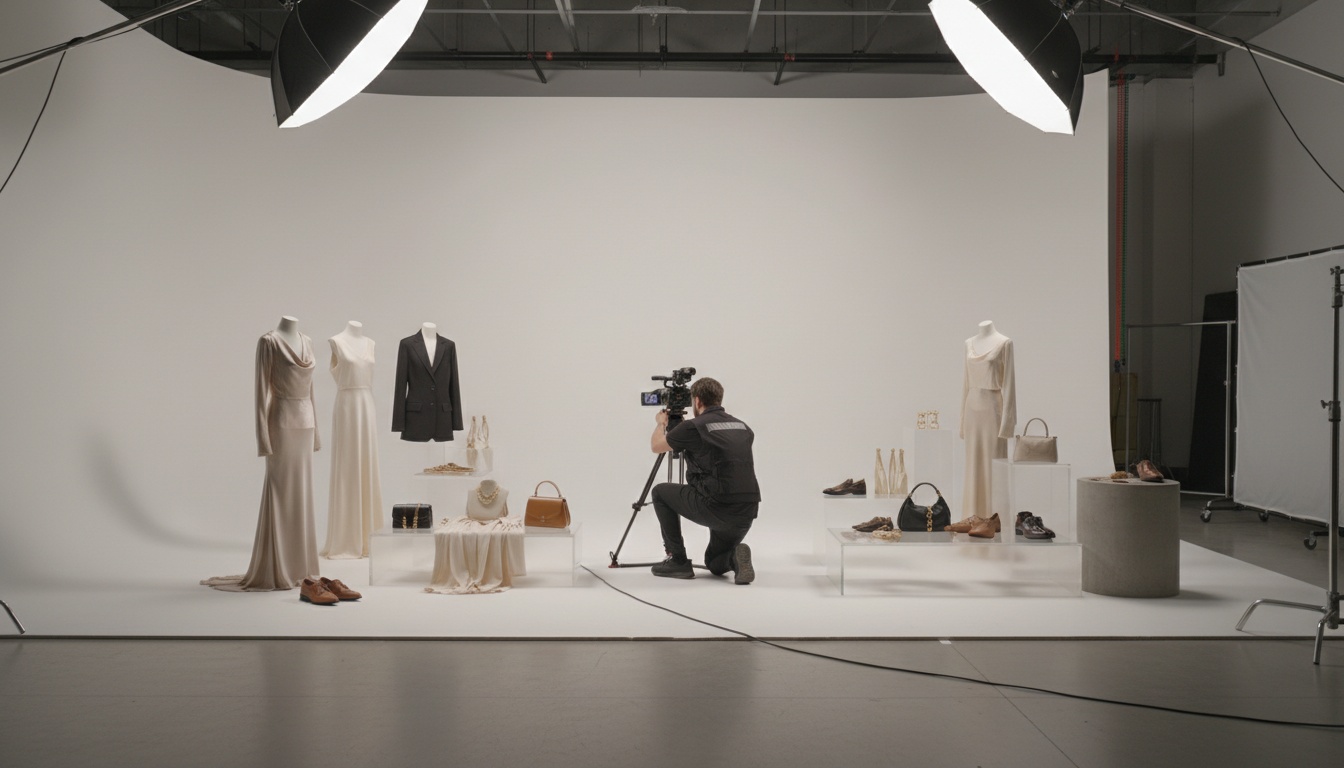
A: Batch filming and template-based editing. Dedicate one day to shooting 10-15 products with consistent lighting and backgrounds. Create 3-5 editing templates for different content types (product demo template, brand story template, testimonial template). Once templates exist, editing becomes a 30-minute task instead of 3 hours.
Then repurpose ruthlessly: one 90-second product demo becomes a 15-second TikTok clip, 30-second Instagram Reel, 60-second YouTube Short, embedded product page video, and multiple static frames for carousel posts. One shoot. Five pieces of content. That's scaling.
Q: Can AI actually automate video production for fashion brands?
A: Modern AI handles tedious tasks like trimming, background removal, color correction, and scene transitions automatically. More importantly, AI can generate realistic voiceovers directly from text and auto-generate subtitles in multiple languages—critical since 78% of video marketers use accessibility features like captions.

What Are the Real Obstacles When Scaling Video?
Q: What technical challenges kill video scaling efforts?
A: Page load speed is critical—40% of consumers abandon websites that take more than three seconds to load. High-quality video files are large, so compress intelligently and use CDNs. Test device compatibility obsessively; a video that plays perfectly on desktop Chrome might stutter on mobile Safari. Budget for storage and bandwidth costs as viewership grows.
How Should You Distribute Video Across Channels?
Q: Which platforms deserve your video content investment?
A: YouTube (used by 90% of video marketers) for long-form product demos and tutorials. Instagram (67% of marketers plan to use it more for video) for 15-60 second vertical Reels. Facebook (used by 86% of video marketers) where live videos outperform pre-recorded content. Your website where 48% of video marketers add videos to blog posts to generate leads.
What's the ROI on Scaling Video Content?
Q: Do fashion brands actually see returns from video investment?
A: 41% of marketers report high ROI from video marketing, and 66% see stronger ROI from product videos than any other content type. Performance metrics show 85% of marketers say video effectively boosts brand engagement, 86% say it educates audiences, and 70% of sales teams say sales videos outperform all other content in driving conversions.
How Can Milano AI Accelerate Your Video Scaling?
Q: Can Milano AI actually replace traditional video production?
A: Milano AI transforms product photos into professional demo videos in minutes through automated video generation. Create AI avatar videos for product demonstrations and tutorials. Use pre-built campaign templates optimized for product launches and seasonal campaigns. The platform handles automated social media distribution—one video becomes TikTok, Instagram Reels, YouTube Shorts, Facebook, and Pinterest content in native formats simultaneously.
Bulk processing lets you upload 50 product photos, set parameters, and receive optimized videos for multiple platforms within hours. Cut content costs by 95% while scaling production 10x. Milano AI functions as your complete marketing operating system: video creation, SEO-optimized blog content, competitor intelligence, social media automation, and analytics—all built exclusively for fashion e-commerce.
The Bottom Line: Scale or Fall Behind
Video content isn't optional for fashion e-commerce—it's survival. The brands winning aren't those with the biggest budgets; they're the ones who figured out how to produce at scale through batching, templating, repurposing, and intelligent automation. Start with these frameworks, measure what drives conversions, and scale strategically. The question isn't whether to scale video content—it's whether you'll do it before your competitors do.
Frequently Asked Questions
Product pages with video see up to 80% higher conversion rates compared to pages without video. Shoppers are 144% more likely to add products to cart after watching video, and 87% of shoppers were convinced to buy after watching video. For fashion brands specifically, video reduces the 22% of returns caused by product expectation mismatches.
Scale Your Fashion E-Commerce with AI
Create professional campaigns and product photography in minutes. Start with 10 free credits—no credit card required.
Related Articles

AI Lifestyle Videos: Compare Top Tools for Fashion Brands in 2026 | Milano AI Guide
Compare top AI lifestyle video tools for fashion e-commerce in 2026. Detailed analysis of Synthesia vs HeyGen vs Runway ML vs Pika Labs vs Milano AI. Learn which platforms deliver ROI for DTC brands, with actionable implementation strategies and cost comparisons. Cut video production costs by 95% while scaling output 10x.

Marketplace Video Optimization: How Fashion Brands Scale Conversions 30%+ in 2026
Fashion brands see 30%+ conversion lifts with optimized marketplace videos, but manual production fails at scale. Learn the cause-and-effect strategies driving success on Amazon, Etsy, and Shopify in 2026—from AI compression eliminating load penalties to shoppable overlays converting views into sales. Complete guide with actionable tactics for DTC brands and retailers.

AI Fashion Photography vs Traditional Shoots: The 2026 Cost-Benefit Analysis
AI fashion photography vs traditional shoots: Compare costs, quality, and speed in 2026. Fashion brands cut content costs by 95% while scaling production 10x. Learn the two proven methods (background-to-lifestyle and flatlay-to-model) with real ROI calculations showing $4K-12K traditional shoots vs $25-500/month AI solutions.