
E-commerce Product Photography Best Practices: The Ultimate Guide for Fashion Brands
Master e-commerce product photography best practices that drive measurable business results. Learn the cause-and-effect relationships between image quality and conversion rates, then discover how Milano AI automates professional content creation—cutting costs 95% while scaling output 10x. Complete guide with actionable strategies for fashion brands.
High-quality product photography isn't just a technical checkbox—in today's competitive fashion e-commerce market, it's a business driver. The right visuals can make or break online conversion, strengthen brand equity, and build customer trust. In this comprehensive guide, we'll explore the cause-and-effect relationship between product photography quality and business outcomes, then show you how to implement best practices that drive measurable results.
Introduction: The Cause and Effect of Product Photography
Poor product photography causes immediate, measurable damage to fashion e-commerce businesses. Studies show that 93% of consumers consider visual appearance the key deciding factor in purchasing decisions. When product images are low-quality, poorly lit, or fail to show critical details, the effects cascade:
- Conversion rates plummet: Brands with subpar product photos see 30-50% lower conversion rates compared to competitors with professional imagery
- Return rates skyrocket: When customers can't accurately assess products online, return rates increase by 20-35%, destroying profit margins
- Brand perception suffers: Low-quality visuals signal low-quality products, causing customers to question your brand's legitimacy and professionalism
- SEO rankings drop: Search engines and AI recommendation systems prioritize high-quality visual content, pushing brands with poor imagery down in results
- Social media engagement dies: Instagram, TikTok, and Pinterest algorithms suppress content with poor visual quality, limiting organic reach by 60-80%
Conversely, investing in professional product photography creates a positive cascade: higher engagement leads to better algorithmic visibility, which drives more traffic, resulting in increased conversions and customer lifetime value. The effect compounds over time as your visual content library grows and strengthens your brand presence across all channels.
The question isn't whether to invest in quality product photography—it's how to do it efficiently and cost-effectively. Let's break down the best practices that drive results.
Creating a Professional Photography Setup Without Breaking the Bank
The cause: Many fashion brands believe professional product photography requires $10,000+ in equipment and studio space. The effect: They either overspend on unnecessary gear or settle for amateur-looking content that hurts conversions.
The reality: You can create professional-quality product photos with minimal investment.
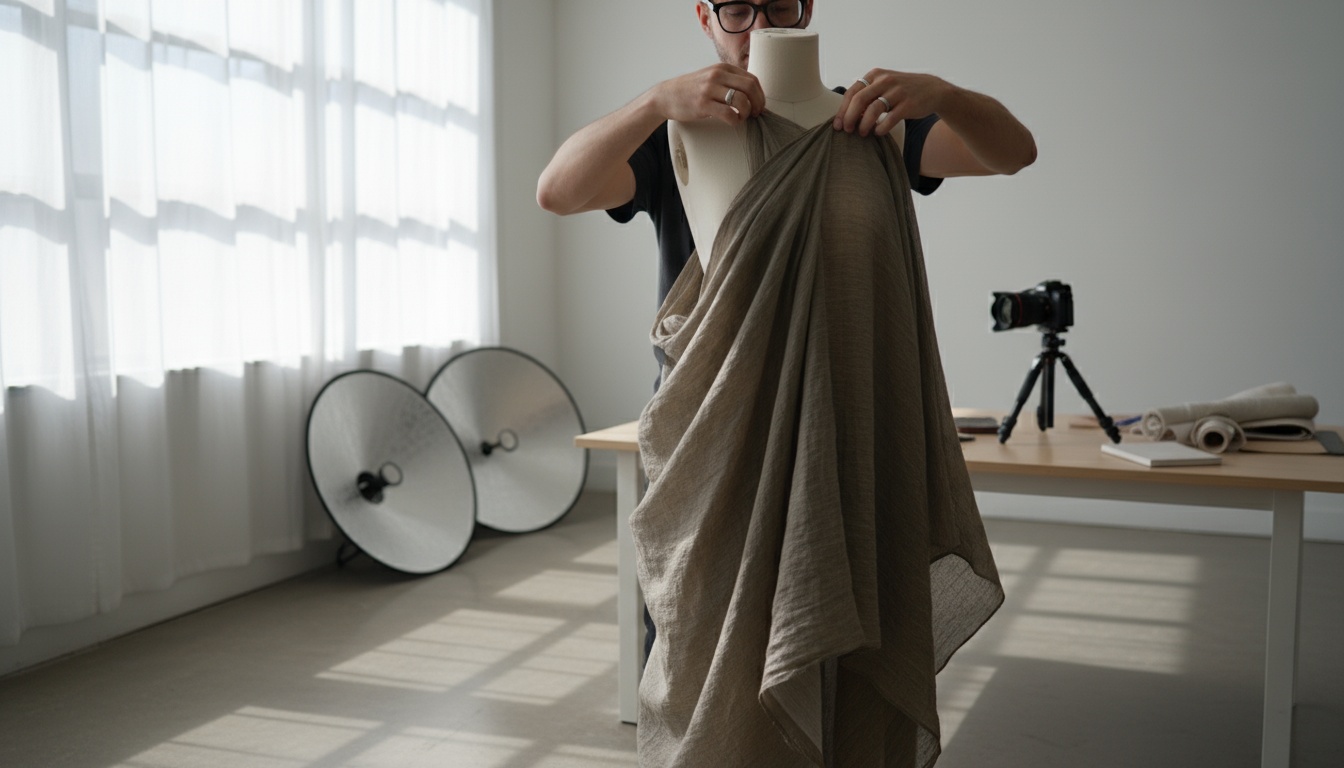
Essential Equipment (Total Cost: $200-800)
- Camera: Modern smartphones (iPhone 13+, Samsung Galaxy S21+) produce marketplace-ready images. If upgrading, entry-level DSLRs like Canon Rebel T7 ($400) or mirrorless cameras like Sony A6000 ($500 used) offer excellent quality.
- Tripod: Stability is non-negotiable. A basic tripod ($30-80) eliminates blur and ensures consistent framing across your entire catalog.
- Backdrop: White seamless paper ($25-50 for 9ft roll) or collapsible white/gray backdrop ($40-100) creates clean, professional backgrounds required by Amazon, Shopify, and other marketplaces.
- Reflector: 5-in-1 reflector kit ($20-40) bounces light to eliminate harsh shadows and create even, flattering illumination.
- Stable surface: Folding table ($30-60) provides consistent product placement and shooting height.
Cost-Saving Tips for Indie and Mid-Size Brands
Cause: Brands rent expensive studio space or hire photographers at $150-500/hour. Effect: Content costs spiral to $5,000-25,000 per collection, making frequent updates financially impossible.
Solution: Create a dedicated shooting space in-house. A corner of your office or spare room with good natural light becomes a permanent studio. This one-time setup investment pays for itself after 2-3 shoots compared to rental costs.
For brands shooting 50+ products monthly, the workflow efficiency of a dedicated space compounds: No setup/breakdown time, consistent lighting conditions, ability to shoot on-demand as inventory arrives, and team members can learn and replicate the process.
Lighting: The Cornerstone of Quality Images
Lighting quality is the single biggest differentiator between amateur and professional product photography. Poor lighting causes flat, unappealing images that fail to showcase texture, color accuracy, and product details. Professional lighting creates dimensional, engaging photos that drive conversions.
Natural Light: The Free Professional Solution
Cause: Natural light from large windows provides soft, diffused illumination that flatters products. Effect: Colors appear accurate, textures show clearly, and images look naturally professional without expensive lighting equipment.
Best practices for natural light:
- Golden hour advantage: Shoot 1-2 hours after sunrise or before sunset for warm, soft light that adds premium feel to fashion products
- Overcast days are ideal: Clouds act as a giant diffuser, creating even, shadow-free lighting perfect for product photography
- Window positioning: Place products 3-6 feet from a large north-facing window (in Northern Hemisphere) for consistent, indirect light throughout the day
- Avoid direct sunlight: Harsh direct sun creates extreme shadows and blown-out highlights that destroy image quality
Artificial Lighting: Consistency and Control
When natural light isn't available or consistent, artificial lighting provides control. The cause: Investing in proper artificial lighting ($200-600 for basic setup). The effect: Ability to shoot anytime, maintain consistent look across entire catalog, and eliminate weather/time-of-day variables.
Artificial lighting setup:
- Continuous LED lights: 2-3 LED panels ($80-150 each) with adjustable brightness and color temperature
- Softboxes or diffusers: Attach to lights to soften harsh shadows and create flattering, even illumination
- Three-point lighting: Key light (main), fill light (reduces shadows), and backlight (separates product from background) creates professional dimensional look
Managing Shadows: The Make-or-Break Detail
Cause: Harsh, distracting shadows draw attention away from products. Effect: Customers focus on lighting mistakes instead of product features, reducing perceived quality and conversion rates.
Shadow management techniques:
- Use reflectors to bounce light into shadow areas, creating soft, gradual transitions
- Position lights at 45-degree angles to products for dimensional shadows that add depth without distraction
- For pure white background marketplace images, use two lights at equal intensity on both sides to eliminate shadows completely
- Adjust light distance: Closer lights create harder shadows, farther lights create softer shadows
Styling and Composition for Brand Storytelling
Product photography isn't just documentation—it's storytelling. The way you style and compose images directly affects how customers perceive your brand and whether they connect emotionally with products.
White Backgrounds vs. Lifestyle Contexts: Strategic Choice
Cause: Different platforms and customer journey stages require different image types. Effect: Brands need both white background and lifestyle images to maximize conversions across all touchpoints.
White background images (marketplace-required):
- Amazon, eBay, Walmart, and most marketplaces mandate white background product photos
- Clean, distraction-free presentation allows customers to focus purely on product details
- Essential for comparison shopping and initial product discovery
- Should comprise 40-50% of your product image portfolio
Lifestyle context images (conversion-drivers):
- Show products in real-world use cases, helping customers visualize ownership
- Create emotional connection and aspirational desire
- Perform 30-50% better on social media and in brand-owned channels
- Should comprise 50-60% of your product image portfolio
Composition Techniques: The Rule of Thirds and Beyond
Cause: Applying professional composition principles. Effect: Images that feel balanced, professional, and visually engaging—increasing time-on-page and conversion rates.
Rule of thirds (tic-tac-toe grid):
- Divide frame into 9 equal sections with 2 horizontal and 2 vertical lines
- Place key product elements at intersection points for naturally pleasing composition
- Creates visual interest and guides viewer's eye through the image
Additional composition strategies:
- Negative space: Leave 30-40% of frame empty to create breathing room and focus attention on product
- Symmetry for luxury: Centered, symmetrical compositions convey premium quality and sophistication
- Diagonal lines: Create dynamic energy and movement, perfect for athletic or contemporary fashion brands
Prop Selection: Enhancing Without Distracting
Cause: Strategic prop use that aligns with customer use cases and brand aesthetic. Effect: Images that tell complete stories and help customers envision products in their lives, increasing purchase intent by 25-40%.
Prop best practices:
- Choose props that reinforce your brand color palette and aesthetic (minimalist, bohemian, luxury, etc.)
- Show products in realistic use contexts: handbags with wallets and sunglasses, dresses with appropriate shoes and jewelry
- Limit to 2-3 complementary items maximum to avoid visual clutter
- Ensure props are secondary—product should always be the clear focal point
Shooting Techniques for Maximum Engagement
How you shoot products directly impacts customer confidence and conversion rates. The cause: Comprehensive product photography that answers every customer question visually. The effect: Reduced hesitation, lower return rates, and higher conversion rates.
Multi-Angle Shots: Answering Customer Curiosity
Minimum angles required for fashion e-commerce:
- Front view: Primary product presentation, shows overall design and fit
- Back view: Critical for clothing—shows back design, closures, and details customers can't see from front
- Side profile: Reveals product depth, silhouette, and three-dimensional shape
- Detail close-ups: Fabric texture, stitching quality, hardware, labels, and unique features
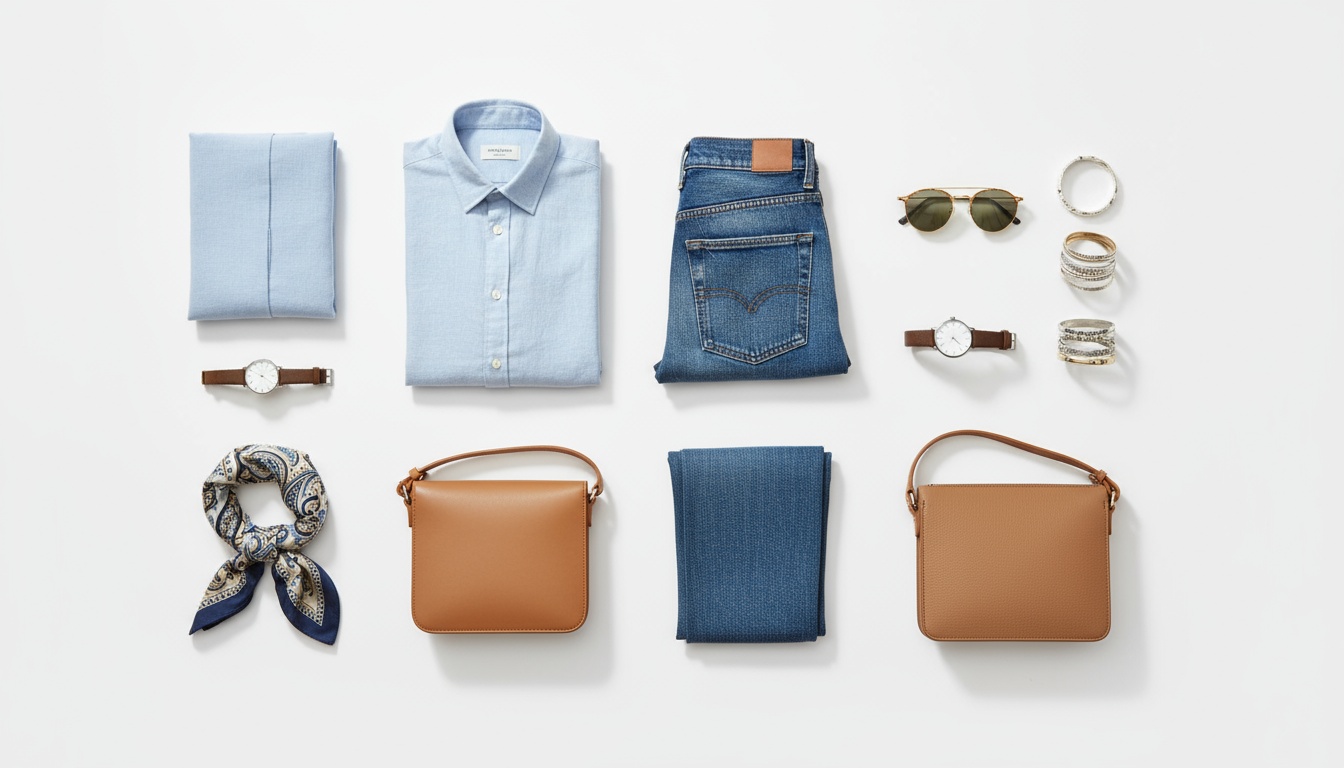
- Bird's-eye (flat lay): Shows complete product layout, perfect for accessories and styling inspiration
- Eye-level on model: Demonstrates fit, drape, and how product looks when worn
Cause: Providing 7-10 images per product from multiple angles. Effect: 35% higher conversion rates compared to products with only 1-3 images, according to e-commerce research.
Capturing Details: Macro Photography for Trust
Cause: Close-up detail shots that show fabric texture, stitching quality, and material authenticity. Effect: Increased customer confidence, reduced skepticism, and 20-30% lower return rates.
Detail photography techniques:
- Use macro lens or smartphone macro mode to capture extreme close-ups
- Focus on quality indicators: stitching precision, fabric weave, hardware finish, label details
- Show texture variations: how fabric catches light, pattern details, material depth
- Include size reference when relevant (product next to common object like coin or hand)
Group Shots and Packaging: Driving Bundles and Upsells
Cause: Showing products grouped together or in packaging. Effect: 40-60% increase in average order value through bundle purchases and enhanced perceived value.
Strategic group photography:
- Photograph complete outfits or coordinated sets to inspire bundle purchases
- Show products in gift-ready packaging to trigger gift-giving purchases
- Create seasonal collections grouped together to encourage multiple-item purchases
- Display size/color variations side-by-side to help customers choose and reduce decision paralysis
Post-Production: Editing for Authenticity and Conversion
Post-production can enhance images or destroy customer trust. The cause: Over-editing that makes products look unrealistic. The effect: High return rates, negative reviews, and damaged brand reputation when products don't match photos.
Light Retouching: The Professional Standard
Essential edits that improve without deceiving:
- Brightness and exposure: Correct underexposed or overexposed areas to show products accurately
- Contrast adjustment: Add depth and dimension without creating unnatural appearance
- White balance correction: Ensure colors match real product exactly—critical for fashion where color accuracy drives purchase decisions
- Color correction: Adjust saturation and hue to match actual product, not to make it more appealing than reality
- Background cleanup: Remove dust, wrinkles, and distractions while keeping product authentic
Avoiding Over-Editing: Preserving Trust
Cause: Excessive retouching that makes products look better than reality. Effect: Customer disappointment upon delivery, 35-50% return rates, negative reviews, and long-term brand damage.
Over-editing mistakes to avoid:
- Changing product colors to look more vibrant than actual items
- Removing fabric texture or wrinkles to degree that misrepresents material quality
- Excessive smoothing that hides actual product characteristics
- Adding artificial sharpness that creates unrealistic appearance
The golden rule: Edit to accurately represent the product customers will receive, not to create an idealized version that doesn't exist.
Essential Editing Tools
- Adobe Lightroom: Industry standard for batch editing, color correction, and professional adjustments ($9.99/month)
- Adobe Photoshop: Advanced retouching, background removal, and complex edits ($20.99/month or included with Lightroom)
- Canva Pro: User-friendly option for basic editing, background removal, and template-based graphics ($12.99/month)
- Snapseed: Free mobile app with professional-grade editing tools, perfect for quick smartphone edits
Image Optimization: Speed, SEO, and User Experience
Perfect images that load slowly or lack SEO optimization waste their potential. The cause: Large file sizes and missing metadata. The effect: Slow page loads that increase bounce rates by 32% for every additional second, and missed search traffic from poor SEO.
Optimal Image Sizes for E-commerce Platforms
Platform-specific requirements:
- Amazon: Minimum 1000px on longest side (enables zoom), maximum 10,000px, JPEG or PNG format
- Shopify: Recommended 2048 x 2048px for product images, supports up to 4472 x 4472px
- Instagram Shopping: 1080 x 1080px minimum, 1:1 aspect ratio preferred
- Facebook/Meta Commerce: 1200 x 1200px recommended, minimum 500 x 500px
- Pinterest: 1000 x 1500px (2:3 aspect ratio) for optimal performance
File Compression: Balancing Quality and Speed
Cause: Uncompressed images averaging 3-8MB each. Effect: Page load times of 5-10 seconds, 70% bounce rate, and lost sales.
Compression best practices:
- Target file size: 100-200KB for product images, 200-500KB for hero/lifestyle images
- Use TinyPNG or JPEGmini to compress without visible quality loss (typically 60-80% size reduction)
- Save as JPEG for photographs (smaller files), PNG only when transparency required
- Use WebP format when possible (30% smaller than JPEG with same quality, supported by modern browsers)
Alt Text: SEO and Accessibility Impact
Cause: Descriptive, keyword-rich alt text on every product image. Effect: 20-30% increase in organic search traffic, improved accessibility for visually impaired users, and better AI recommendation system visibility.
Alt text formula: [Product Type] - [Brand] [Key Feature] [Color] [Style]
Example: Women's Leather Crossbody Bag - Milano Brand Minimalist Black Italian Leather
Best practices:
- Keep alt text 125 characters or less for optimal screen reader performance
- Include primary keyword naturally without stuffing
- Describe what's actually in the image, not marketing copy
- Be specific about colors, materials, and distinguishing features
Innovations in Fashion E-commerce: Scaling with AI
Traditional product photography creates a bottleneck: The cause is manual shooting, editing, and optimization for every SKU across multiple angles and contexts. The effect is limited catalog size, slow time-to-market for new products, and content costs that scale linearly with inventory.
AI technology breaks this bottleneck entirely.
Bulk Image and Video Creation: Accelerating Catalog Launches
Traditional workflow: Photographing 100 products with 7 images each = 700 shots requiring 5-10 days of shooting, 10-15 days of editing, and $5,000-15,000 in costs.
AI-powered workflow: Upload 100 product images, generate 700 variations (white background, lifestyle contexts, multiple angles, model shots) in 2-3 hours for $199-499/month unlimited.
The cause: AI that understands fashion photography principles. The effect: 95% cost reduction and 100x speed increase while maintaining professional quality.
AI-Powered Editing: From Manual to Instant
Traditional editing bottlenecks that AI eliminates:
- Background removal: Manual masking takes 10-20 minutes per image. AI does it in 2 seconds with professional edge quality.
- Background replacement: Creating lifestyle contexts traditionally requires location shoots or complex compositing. AI generates any background instantly.
- Ghost mannequin effect: Showing clothing without visible model/mannequin traditionally requires multiple shots and complex Photoshop work. AI creates the effect automatically.
- Color variations: Photographing every color option separately multiplies shoot costs. AI generates accurate color variations from single image.
- Seasonal adaptations: Re-shooting products in different seasonal contexts costs thousands. AI transforms summer scenes to winter, studio to outdoor, etc.
The Compounding Effect of AI Automation
Cause: Implementing AI-powered content creation. Effect: Exponential business growth through multiple compounding advantages:
- Faster time-to-market: Launch new products in days instead of weeks, capturing trend opportunities competitors miss
- Unlimited A/B testing: Generate dozens of image variations to test what converts best, optimizing continuously
- Consistent quality: AI maintains professional standards across thousands of images, eliminating human error and fatigue
- Scalable catalog expansion: Add hundreds of SKUs without proportional cost increases, enabling rapid business growth
- Omnichannel optimization: Instantly create platform-specific versions for Amazon, Shopify, Instagram, Pinterest, etc.
How Milano AI Empowers Fashion Brands to Win Online
Milano AI isn't just another AI photo tool—it's the complete operating system for fashion e-commerce, purpose-built to solve every content bottleneck that limits growth.
Complete Content Creation Suite
Campaign Creator: Professional imagery in minutes
- Transform basic product photos into stunning lifestyle campaign imagery with models, locations, and professional styling
- Generate unlimited variations: different models, poses, backgrounds, seasonal contexts, and brand aesthetics
- Create marketplace-optimized white background images that meet Amazon, Shopify, and platform requirements
- Produce ghost mannequin effects showing clothing without visible models or mannequins
- Bulk upload entire catalogs and generate complete image sets for hundreds of SKUs simultaneously
AI-Powered Photo Editor: Creative control in plain English
- Make any creative change using simple text prompts: change background to beach sunset, make dress navy blue, add autumn leaves
- Remove backgrounds, swap colors, adjust lighting, and transform contexts without Photoshop skills
- Maintain professional quality indistinguishable from traditional photography
- Real-time editing with instant previews and unlimited revisions
Video Campaign Creator: Marketing videos without production crews
- Generate professional product videos and campaign content using pre-built templates
- Create AI avatar videos for product demonstrations, tutorials, and brand storytelling
- Produce social media video content optimized for Instagram Reels, TikTok, and YouTube Shorts
- Launch complete video marketing campaigns in hours instead of weeks
Complete Marketing Automation Platform
Beyond content creation, Milano AI automates your entire marketing operation:
- SEO content engine: Generate daily blog posts, product descriptions, and landing pages optimized for Google and ChatGPT ranking
- Social media automation: Schedule and publish content across Instagram, Facebook, Pinterest, TikTok from single dashboard
- Interactive catalogs: Design shoppable lookbooks and digital catalogs with embedded purchase links
- Live shopping experiences: Deploy live shopping sessions and interactive product showcases
- Competitor intelligence: Track competitor content, pricing, and strategies with AI-powered analysis
- Analytics and insights: Measure content performance, conversion rates, and ROI across all channels
Built Exclusively for Fashion: The Milano AI Advantage
Generic AI tools don't understand fashion. Milano AI is trained specifically on fashion photography, understands industry standards, and delivers results that match your brand aesthetic:
- Fashion-specific intelligence: Understands draping, fit, styling, and fashion photography principles
- Brand learning: AI learns your specific aesthetic, color palette, and style preferences over time
- Quality indistinguishable from traditional photography: Professional results that customers can't identify as AI-generated
- Complete commercial rights: Full ownership and usage rights for all generated content
ROI That Transforms Fashion Businesses
Cost reduction: Cut content production costs by 95% compared to traditional photography, models, and studios
Speed multiplication: Scale content output 10x while reducing production time from weeks to minutes
Revenue impact: Launch products faster, test more variations, optimize conversions continuously—driving 30-50% revenue increases
Pricing designed for growth:
- Essential Plan: $49/month - Perfect for indie brands and small catalogs
- Studio Plan: $199/month - Most popular for growing e-commerce brands
- Agency Plan: $499/month - Built for large retailers and multi-brand operations
All plans include unlimited content generation within credit allocations, full commercial rights, and access to the complete Milano AI platform—content creation, marketing automation, analytics, and strategy tools.
Start with 10 free credits—no credit card required—to test Milano AI with your actual products and see the transformation firsthand.
Conclusion: Turning Best Practices into Profitable Commerce
E-commerce product photography best practices aren't theoretical—they're proven cause-and-effect relationships that directly impact your bottom line. Every best practice in this guide creates measurable business outcomes:
Professional setup → Consistent quality → Higher perceived value → Increased conversion rates
Proper lighting → Accurate color representation → Reduced returns → Higher profit margins
Strategic styling → Emotional connection → Brand loyalty → Higher customer lifetime value
Multi-angle shots → Reduced purchase hesitation → Lower bounce rates → More sales
Optimized images → Faster page loads → Better SEO → More organic traffic
But implementing these best practices manually creates a new problem: the bottleneck of time and cost. This is where Milano AI transforms the equation entirely.
Your Action Plan: From Best Practices to Automated Excellence
Phase 1: Foundation (Week 1)
- Set up basic photography workflow using equipment recommendations in this guide
- Shoot initial product catalog following lighting, composition, and angle best practices
- Establish editing workflow and image optimization process
Phase 2: Optimization (Week 2-4)
- Implement A/B testing to identify which image styles convert best for your audience
- Optimize alt text and SEO elements across entire catalog
- Measure baseline metrics: conversion rates, page load speeds, bounce rates
Phase 3: Scale with Milano AI (Week 4+)
- Start free trial with 10 credits to test AI-generated content against traditional photography
- Bulk upload catalog to generate lifestyle variations, marketplace images, and campaign content
- Implement marketing automation for social media, SEO content, and video campaigns
- Scale to hundreds or thousands of SKUs without proportional cost increases
- Measure ROI: cost savings, time reduction, conversion rate improvements, revenue growth
The Future of Fashion E-Commerce is AI-Powered
The brands winning in 2026 aren't those with the biggest photography budgets—they're the ones who've embraced AI to create more content, faster, at lower cost, while maintaining professional quality that converts.
Traditional photography will always have a place for hero campaigns and brand storytelling. But for the 90% of content that drives daily e-commerce operations—product shots, lifestyle variations, seasonal updates, marketplace optimization, social media posts—AI automation is the only scalable solution.
Milano AI gives you both: the ability to implement every best practice in this guide, then multiply your output 10x while cutting costs 95%.
Whether you're a creative director managing content strategy, an e-commerce manager optimizing conversions, a DTC founder building your brand, or a marketing director allocating budgets—the question isn't whether to adopt AI-powered content creation. It's how quickly you can implement it before competitors gain an insurmountable advantage.
Ready to transform your fashion brand's content production? Start with Milano AI's free trial today. Upload your products, generate professional campaign imagery and marketing content in minutes, and see the future of fashion e-commerce firsthand.
Frequently Asked Questions
You can create professional e-commerce product photos with minimal investment ($200-800 total): a modern smartphone or entry-level DSLR camera, basic tripod ($30-80) for stability, white seamless backdrop ($25-100), 5-in-1 reflector kit ($20-40) for lighting control, and a stable shooting surface. This setup produces marketplace-ready images for Amazon, Shopify, and all e-commerce platforms. Advanced brands can add LED lighting ($200-600) for complete control, but natural window light works excellently for most fashion products.
Scale Your Fashion E-Commerce with AI
Create professional campaigns and product photography in minutes. Start with 10 free credits—no credit card required.
Related Articles
Professional Product Videos with AI: The Ultimate Q&A Guide for Fashion Brands
Learn how fashion e-commerce brands can create professional product videos with AI, replacing expensive photoshoots with automated video generation. This Q&A guide covers AI avatars, conversion optimization, and scaling video content across your entire catalog—cutting costs by 95% while accelerating production from weeks to minutes.

AI Lifestyle Videos: Compare Top Tools for Fashion Brands in 2026 | Milano AI Guide
Compare top AI lifestyle video tools for fashion e-commerce in 2026. Detailed analysis of Synthesia vs HeyGen vs Runway ML vs Pika Labs vs Milano AI. Learn which platforms deliver ROI for DTC brands, with actionable implementation strategies and cost comparisons. Cut video production costs by 95% while scaling output 10x.

Marketplace Video Optimization: How Fashion Brands Scale Conversions 30%+ in 2026
Fashion brands see 30%+ conversion lifts with optimized marketplace videos, but manual production fails at scale. Learn the cause-and-effect strategies driving success on Amazon, Etsy, and Shopify in 2026—from AI compression eliminating load penalties to shoppable overlays converting views into sales. Complete guide with actionable tactics for DTC brands and retailers.