
AI Fashion Photography in 2026: 12 Critical Questions Every Fashion Brand Must Answer
AI fashion photography has evolved from experimental to essential in 2026. This comprehensive Q&A guide answers the 12 most critical questions fashion e-commerce brands ask about cutting content costs by 95%, scaling production 10x, and replacing traditional photoshoots with AI-powered automation. Learn strategic implementation, ROI calculations, and why fragmented tools are costing you more than you think.
Fashion brands waste $5,000-25,000 per photoshoot while competitors generate unlimited professional content for pennies. AI fashion photography has evolved from experimental to essential—cutting costs by 95% and production time from weeks to minutes. This Q&A guide answers the 12 most critical questions fashion e-commerce brands ask about scaling content with AI in 2026.
1. What Exactly Is AI Fashion Photography and Why Does It Matter for Your Bottom Line?
AI fashion photography uses machine learning to generate photorealistic images of clothing on models, in lifestyle settings, or optimized for marketplaces—all from a single product photo. Upload a flatlay, get 100+ variations with diverse models, backgrounds, and compositions in under an hour.
The business case is simple: Traditional shoots cost $5,000-25,000 per campaign. AI reduces this to $50-500 while eliminating 2-4 week lead times. For high-SKU brands managing hundreds of products, this isn't a nice-to-have—it's the difference between profitability and burning cash on content production.
2. Can AI Actually Replace Traditional Photoshoots for E-Commerce Catalogs?
AI handles 80-90% of catalog needs: white background product shots, on-model imagery, lifestyle contexts, and marketplace-optimized formats. The technology preserves garment details—folds, textures, colors—with pixel-perfect accuracy that passes Amazon and Shopify quality standards.
Strategic approach: Use AI for volume content (catalog, social, ads) and reserve traditional shoots for 10% hero campaigns. Test with 10-20 SKUs first, measure conversion rates, then scale. Most brands see equal or better performance from AI-generated content at 5% of the cost.
3. Which AI Tools Actually Deliver Professional Results for Fashion Brands?
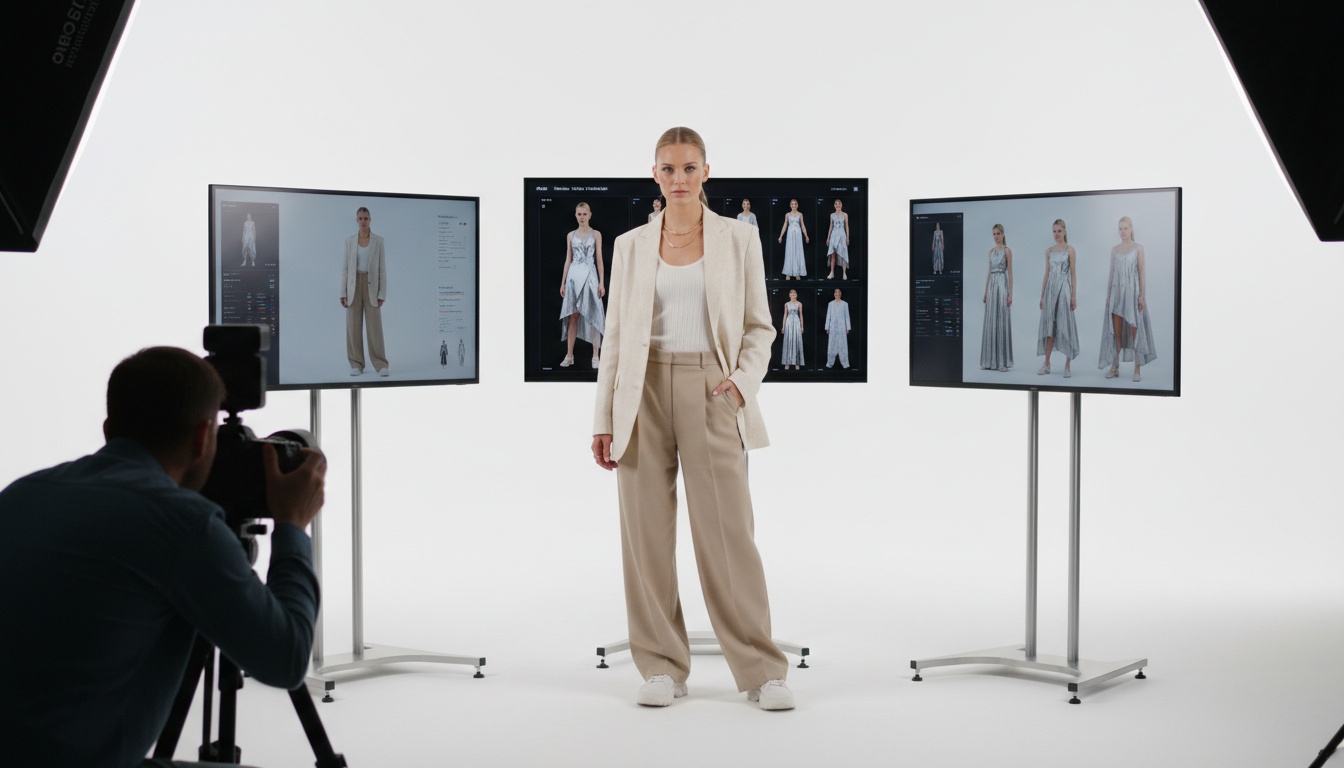
The market is fragmented with point solutions: Claid for on-model shots, Botika for Shopify integration, FASHN AI for virtual try-on. Each solves one piece of the puzzle but forces brands to juggle multiple subscriptions, learn different interfaces, and manually transfer assets between platforms.
The hidden cost: Tool fragmentation wastes 10-15 hours weekly on workflow management. Fashion brands need integrated solutions that handle the complete content lifecycle—not another SaaS subscription to manage.
4. How Do You Choose AI Models That Actually Represent Your Target Customer?
Diversity matters for conversion. Look for platforms offering 100+ models across body types, ethnicities, ages, and genders. Fashion-specific AI understands garment drape and fit across different body types—generic tools fail here.
Conversion optimization: Test your top 5 SKUs on 3-5 different model types and body sizes. Track which combinations drive highest add-to-cart rates. Use AI to A/B test model selection at scale—something impossible with traditional photography budgets.
5. What's the Real ROI on Virtual Try-On Technology?
Virtual try-on (VTO) increases conversions 20-30% by reducing purchase anxiety. Customers see products on themselves or AI models matching their body type before buying. This directly impacts return rates—the silent profit killer for fashion e-commerce.
Implementation priority: Start with static VTO on product pages for top 20% of SKUs (80/20 rule). Measure conversion lift and return rate reduction. Scale to video VTO for social media once static proves ROI. VTO pays for itself within 30-60 days for most brands.
6. How Does AI Handle Background Editing Without Professional Designers?
AI background tools (outpainting, removal, replacement) place products in any environment via text prompts. Describe 'minimalist studio with natural light' or 'urban street at sunset' and generate instantly. No Photoshop skills required.
Strategic use: Transform studio shots into lifestyle content for social media. Create location-specific variations for geo-targeted ads. Generate seasonal backgrounds without reshooting entire catalogs. This flexibility is impossible with traditional photography.
7. What's the True Cost Comparison: Traditional vs. AI Fashion Photography?
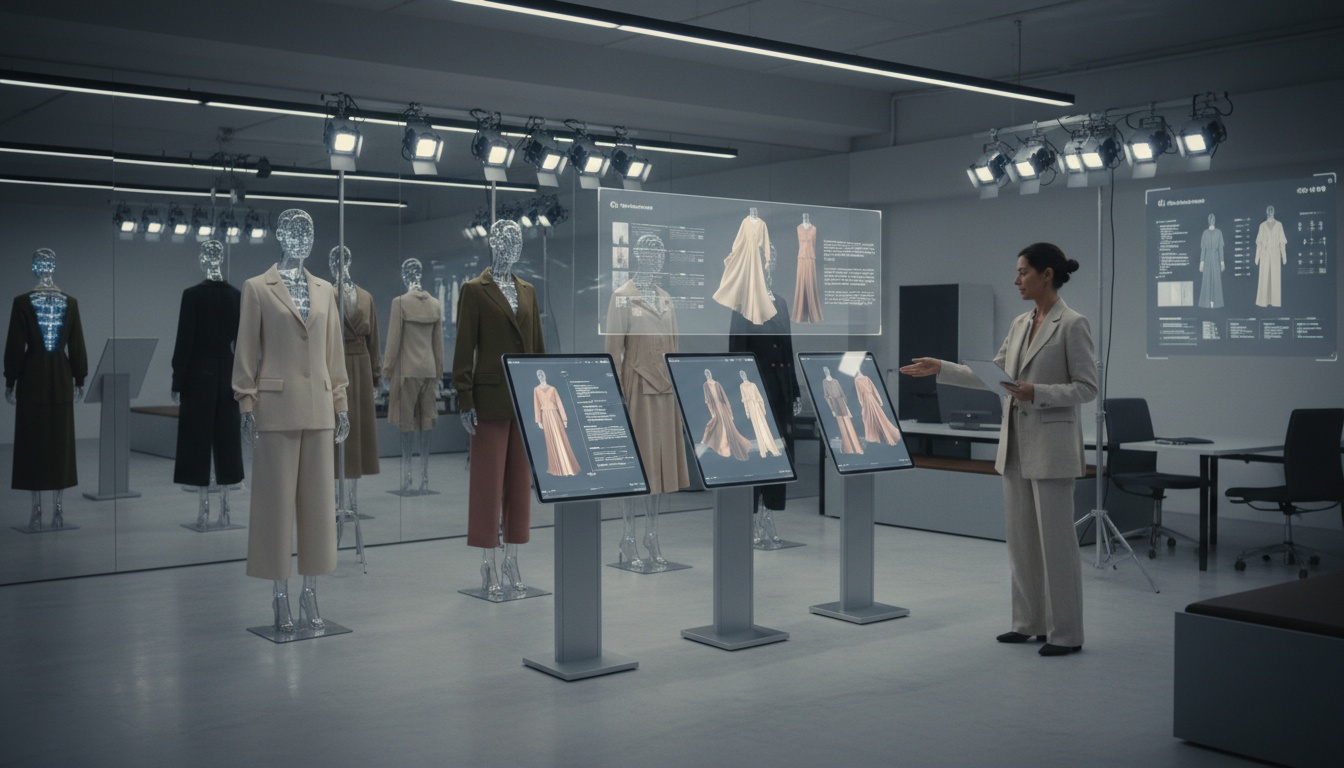
Traditional photoshoot: $5,000-25,000 per campaign (photographer, models, studio, styling, editing). Timeline: 2-4 weeks. Output: 50-200 final images.
AI photography: $100-500 for equivalent output. Timeline: 2-4 hours. Output: Unlimited variations.
ROI calculation: 100 SKUs × $50 traditional cost = $5,000. AI cost: $100-500. That's 90-95% savings. Reinvest those savings into paid acquisition or product development—not content production.
8. What Are the Biggest Mistakes Brands Make With AI Fashion Photography?
Common failures: Using unrealistic edits that violate marketplace policies, poor model diversity hurting conversion, choosing generic AI tools that don't understand fashion, and treating AI as a complete replacement instead of strategic tool.
Winning approach: Hybrid strategy—AI for volume and speed, traditional for brand-defining hero content. Test everything. Track metrics. Optimize based on data, not assumptions about what 'looks better.'
9. Can Small Fashion Brands (Under 50 Employees) Actually Compete Using AI?
Absolutely. AI levels the playing field—indie labels now create content quality previously requiring six-figure budgets. Small teams generate complete seasonal campaigns in hours, not months.
Competitive advantage: While established brands navigate bureaucracy, small brands move fast. Launch collections weekly. Test trends immediately. Respond to viral moments in real-time. AI gives small brands the agility that large competitors can't match.
10. What's Coming Next in AI Fashion Photography Beyond 2026?
Full video campaign generation, AI avatars for product tutorials, predictive trend analysis, and SEO content automation. The technology evolves toward complete marketing automation—not just content creation.
Strategic positioning: Brands investing in AI infrastructure now build competitive moats. As technology advances, they scale effortlessly while competitors scramble to catch up.
11. How Do You Get Started Without Wasting Time or Budget?
Define your primary need: catalog optimization, social content, or marketplace listings. Test 2-3 tools with 10-20 SKUs. Measure conversion impact. Scale what works.
90-day roadmap: Month 1: Test and select platform. Month 2: Migrate 50% of catalog. Month 3: Full automation and optimization. Track ROI weekly—if you're not seeing 10x return within 90 days, you're using the wrong tool or strategy.
12. Why Are Fragmented AI Tools Costing You More Than You Think?
Using separate tools for product photos, lifestyle content, video, social media, and SEO creates hidden costs: subscription sprawl, workflow complexity, team training overhead, and asset management chaos.
The solution: Integrated platforms that handle the complete content lifecycle. One system, one workflow, one source of truth for all visual content and marketing automation.
Milano AI: The Complete Fashion E-Commerce Operating System
Stop juggling fragmented tools. Milano AI is the only platform built exclusively for fashion brands that handles everything: unlimited product photography variations, lifestyle campaign generation, video content creation, AI avatar videos, SEO blog automation, social media scheduling, interactive catalogs, and live shopping—all from one dashboard.
Upload your catalog once. Generate white backgrounds, on-model shots, lifestyle scenes, and videos for every SKU. Our AI photo editor understands plain English: 'swap to diverse models, urban background, create video reel.' No technical skills required.
Beyond content creation, Milano AI automates your entire marketing stack: daily SEO content that ranks on Google and ChatGPT, automated social posts, competitor intelligence, analytics, and strategy—replacing creative teams and agencies entirely.
Built for fashion e-commerce at every scale: indie labels to enterprise retailers. Cut costs 95%, scale production 10x, turn weeks into minutes. This isn't another AI photo tool—it's your complete business operating system.
Ready to transform your fashion business? Start your free trial today and see why leading brands are consolidating their entire content and marketing stack into Milano AI.
Frequently Asked Questions
AI fashion photography uses machine learning to generate photorealistic images of clothing on models, in lifestyle settings, or optimized for marketplaces from a single product photo. Upload a flatlay and get 100+ variations with diverse models, backgrounds, and compositions in under an hour. It reduces traditional photoshoot costs by 95% while eliminating 2-4 week lead times.
Scale Your Fashion E-Commerce with AI
Create professional campaigns and product photography in minutes. Start with 10 free credits—no credit card required.
Related Articles

Professional Product Videos with AI: The Ultimate Q&A Guide for Fashion Brands
Learn how fashion e-commerce brands can create professional product videos with AI, replacing expensive photoshoots with automated video generation. This Q&A guide covers AI avatars, conversion optimization, and scaling video content across your entire catalog—cutting costs by 95% while accelerating production from weeks to minutes.

AI Lifestyle Videos: Compare Top Tools for Fashion Brands in 2026 | Milano AI Guide
Compare top AI lifestyle video tools for fashion e-commerce in 2026. Detailed analysis of Synthesia vs HeyGen vs Runway ML vs Pika Labs vs Milano AI. Learn which platforms deliver ROI for DTC brands, with actionable implementation strategies and cost comparisons. Cut video production costs by 95% while scaling output 10x.

Marketplace Video Optimization: How Fashion Brands Scale Conversions 30%+ in 2026
Fashion brands see 30%+ conversion lifts with optimized marketplace videos, but manual production fails at scale. Learn the cause-and-effect strategies driving success on Amazon, Etsy, and Shopify in 2026—from AI compression eliminating load penalties to shoppable overlays converting views into sales. Complete guide with actionable tactics for DTC brands and retailers.